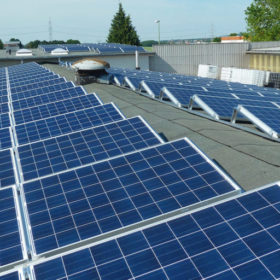
Germany has 200,000 solar-plus-storage systems
EuPD Research estimates around 65,000 energy storage systems linked to rooftop PV were installed last year thanks to increasingly popular solar arrays and electric vehicles as well as rising electricity prices.
Renewables PPA signed in Spain despite Covid-19 disruption
Portuguese electric utility EDP will supply power to Dutch nutrition, health and sustainable lifestyle multinational Royal DSM. The agreement relates to 59 MW of solar and wind generation capacity.

Australian researchers take solar windows to the next level
The building-integrated PV devices have taken a big leap forward on the back of a partnership between Australian scientists and a major glass manufacturer which will investigate the use of semi-transparent solar cells in commercial applications, potentially revolutionizing building design.
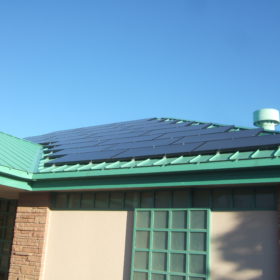
Switching from ownership to leasing in times of Covid-19
Dutch solar distributor Enie is offering to buy rooftop PV systems from cash-strapped owners who will then receive a monthly leasing fee before regaining ownership of the hardware a decade on. The company will pay around 85% of the initial cost of the arrays but said it will not consider systems with ‘poor’ design or components.
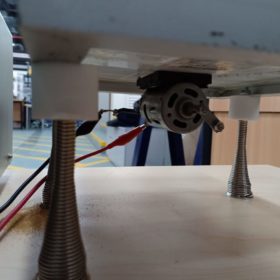
Vibration tech for self-cleaning solar panels
Scientists in the U.K. have developed a system which makes panels vibrate to provide cleaning. The academics have conceded, however, they are yet to calculate the ‘sweet spot’ of mechanical stress to be applied.

Italy deployed 737 MW of solar in 2019
The Italian market saw a year-on-year increase in new installations as several unsubsidized solar parks came online. Most of last year’s new capacity arrived in November and December. The regions with largest volumes were big-solar magnets Apulia and Sardinia.

US module shipments down in January and February
While the volume of combined imports and exports slumped from almost 2 GW in December to 1.49 GW in January and 1.36 GW in February, the price per kilowatt rose dramatically in the second month of the year.
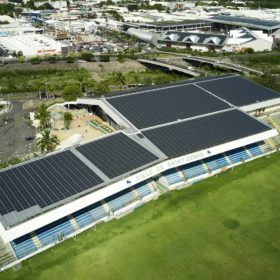
La Réunion stadium hosts 1.25 MW/1.33 MWh of solar-plus-storage
The project was selected in a tender for storage deployment in non mainland grid interconnected areas that was finalized by France’s Energy Regulatory Commission in 2016.
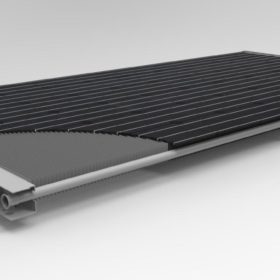
A photovoltaic thermal panel for heat-pump houses
Dutch company Triple Solar has launched a photovoltaic thermal solar panel for residential buildings which can be connected to a brine or water heat pump. The manufacturer says the heating system based on the panel is an ideal alternative to less efficient air and water heat pumps and more expensive geothermal systems. The grid-connected PV system can export excess power under net metering programs.
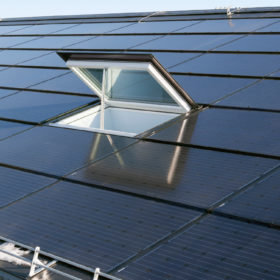
Switzerland provides additional $47m for solar incentives
The government wants to see off a potential slump in the PV market as a result of the Covid-19 pandemic. The increase means CHF376 million worth of rebates will be available for solar systems.
