
Researchers propose new taxonomy for agrivoltaics
A Malaysian research team proposed new concepts such as cowvoltaics, sheepvoltaics, goatvoltaics, veggievoltaics, fruitvoltaics and fishvoltaics to better define the diverse applications of photovoltaics in dual land use. Their review outlines four main categories – livestockvoltaics, crop-based agrivoltaics, aquavoltaics, and zoovoltaics – and presents several business cases.
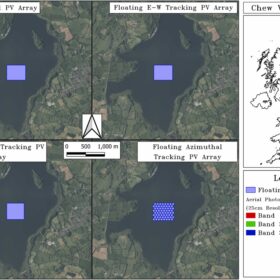
UK study finds azimuthal trackers boost floating PV performance
A University of Exeter team has tested single-axis tracking systems for floating solar across 12 UK sites, finding azimuthal tracking delivers the largest energy gains and lowest levelized cost of energy (LCOE).
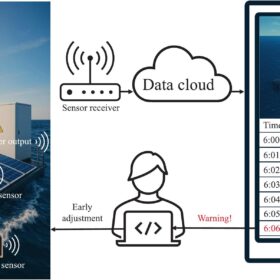
New digital twin for floating PV application uses artificial intelligence
Scientists have developed a floating PV digital twin system, trained on data from 155 physical experiments, using a two-tier artificial neural network (ANN) with a high-fidelity model and a reduced-order model. Predictive performance reached R2 values of 0.9996 for PV surface temperature and 0.9189 for power output.
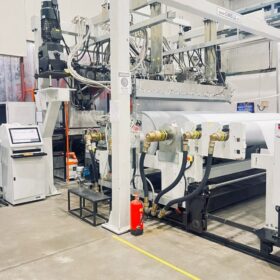
Saatvik Green commissions 2 GW EPE film manufacturing facility
Saatvik Green Energy has commissioned a 2 GW in-house EPE film manufacturing facility at its Ambala campus in Haryana.
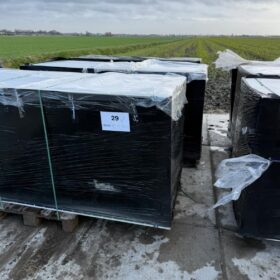
Solar glare forces panel removal at Amsterdam Airport
Glare from a nearby solar park forced temporary runway closures at Amsterdam Airport Schiphol, prompting Dutch authorities to order the removal of about 78,000 PV modules and apply anti-reflective film to others. The solar park operator, however, decided to replace all the panels. The largest portion of the removed, near-new modules have since been acquired by BM Energy and are expected to be redeployed in projects where glare is not a concern.
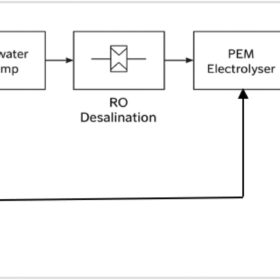
Off-grid floating PV-desalination system for hydrogen production
Scientists have simulated a solar-powered hydrogen production system comprising 32,050 photovoltaic panels, a pumping system, a seawater reverse-osmosis desalination unit, an electrolyzer, and a hydrogen storage tank. Operation of the system in Oman could potentially yield a levelized cost of electricity of $0.05/kWh and a levelized cost of hydrogen of $9.5/kg.
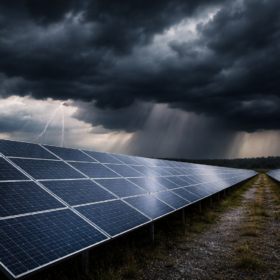
Building resilience amid intensifying weather events
In its latest monthly column for pv magazine, IEA PVPS shows that with climate-specific site selection, robust design, proper installation, and proactive O&M, most PV systems can be made resilient and remain reliable despite intensifying weather risks.
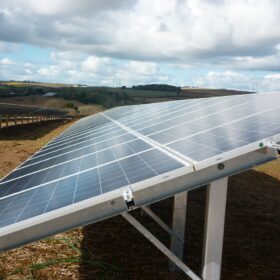
Slovak researchers predict PV inverter output without weather sensors
Researchers in Slovakia have demonstrated a machine-learning framework that predicts PV inverter output and detects anomalies using only electrical and temporal data, achieving 100% accuracy in classifying inverter output states under static operating conditions at a solar installation.
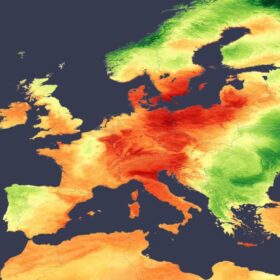
Tracks of low-pressure systems split Europe’s solar performance in November
In a new weekly update for pv magazine, Solcast, a DNV company, reports that Europe’s solar generation potential in November showed a strong east–west split, with Eastern Europe experiencing 15–20% below-normal irradiance due to persistent storms, while much of Western and Central Europe recorded 15–20% above-average levels under clearer conditions. The Atlantic coast was an exception, as Storm Claudia reduced irradiance to near or below average in Portugal, the British Isles, and parts of France and Spain.
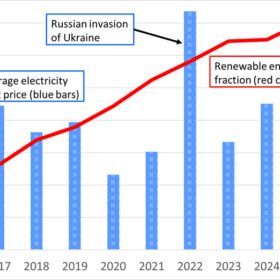
Solar, wind and storage: stable prices, stable grid
In its latest monthly column for pv magazine, the International Solar Energy Society (ISES) explains how Australia’s rapid expansion of solar and wind energy has not increased wholesale electricity prices, which have remained stable since 2016. Rooftop solar, now widespread and highly cost-effective, provides the country with resilient, low-emission power, making all-electric homes increasingly independent from the grid.
