
Auctions show Indian renewables still primed for growth
A report by the Institute for Energy Economics and Financial Analysis says there is plenty of investment capital available for Indian renewables, despite pandemic disruption.
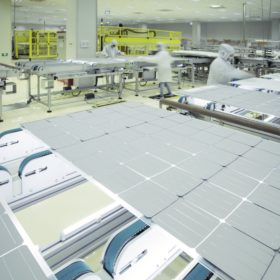
Chinese PV Industry Brief: More ingot and module capacity, China’s largest rooftop project and a possible new listing
A new week has brought another slew of big production capacity announcements as online retailer JD.com prepares to install 200 MW of solar rooftop capacity and project developer SFSY reported on a promising new business stream.

Iberdrola sets up green hydrogen unit
The Spanish energy company, which has hydrogen projects under way in its homeland and the United Kingdom, says it will allocate new resources to position itself at the forefront of the supply of renewables-powered hydrogen.

Netherlands allocates 3.44 GW of PV in spring round of 2020 SDE+ program
The Dutch government awarded 3.91 GW of renewable-energy capacity in the program’s latest round. It set aside €4 billion for the exercise, but only used €3.3 billion, including €2.1 billion for PV.
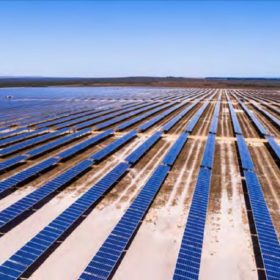
Western Australia seeks proposals for 1.5 GW of green hydrogen
The Western Australian government is talking to developers around the world about building a 1.5 GW wind and solar hydrogen hub at the Okajee Strategic Industrial Area. The state’s Mid West region has some of the world’s best solar and wind resources and they could drive the development of a local green hydrogen economy.
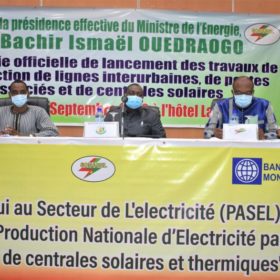
Construction begins on 30 MW of solar in Burkina Faso
Work has started on PV plants with generation capacities of 20 MW and 10 MW. The facilities will be located in Koudougou, in Boulkiemdé province and in Kaya, in Sanmatenga, respectively.
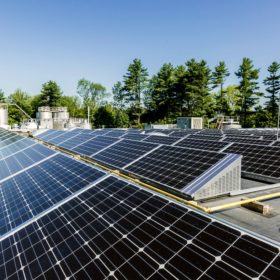
Probabilistic model indicates PV module warranty reliability
U.S.-Spanish researchers have proposed a new way to assess the reliability of PV modules and their warranties. It is impossible to fulfill a 25-year warranty if the threshold of returned modules exceeds 5% and the annual degradation rate is over 0.73%.
Chinese PV Industry Brief: 1 GW of distributed solar came online in August
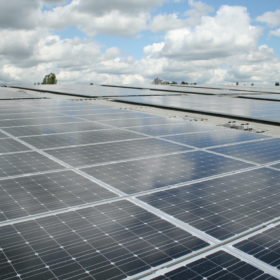
More than 1 GW of subsidized small solar arrays were installed in China last month alone and manufacturer Suntech has announced the start of operations at its 500 MW Indonesian cell and module fab.
New world record for large-area organic PV module efficiency
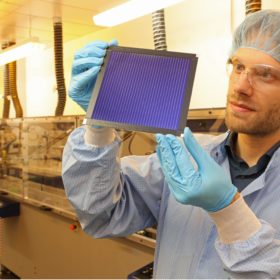
Scientists in Germany have achieved 12.6% efficiency with a 26 sq cm organic panel and 11.7% for a 204 sq cm device. The feats were achieved with a new module layout and a slower, high-resolution, short-pulse laser structuring process.
Toshiba develops more Japanese solar and hydrogen
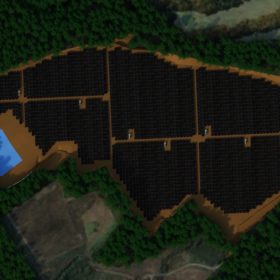
The electronics giant is building two PV plants with a combined generation capacity of 58 MW owned by U.S. module manufacturer First Solar. Toshiba is also extending its hydrogen research project in Fukushima for another two years.
