
China entering post-FIT era with solid prospects
The Chinese government is planning to phase out FITs and subsidies for all kinds of PV installation by the end of this year, according to the China Photovoltaic Industry Association. The trade body, however, expects strong recovery for domestic solar demand over the next five years, beginning in the second half of 2020.
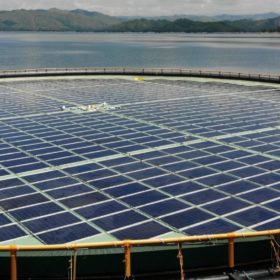
Albania’s first floating PV project now under construction
Norway’s Statkraft is building a 2 MW floating PV array, first announced a year and a half ago, at its 72 MW hydropower plant in Albania’s Elbasan region. Norwegian floating PV specialist Ocean Sun has agreed to supply tech for the €2 million plant.
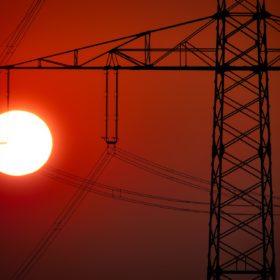
Global solar capacity may reach 1,448 GW in 2024
SolarPower Europe has predicted the volume of new PV capacity added this year will be 4% less than last year’s figure because of the Covid-19 crisis. At the end of 2019, the world had topped 630 GW of solar. For 2020, around 112 GW of new PV capacity is expected, and in 2021, newly installed capacity could be 149.9 GW if governments support renewables in their coronavirus economic recovery plans.
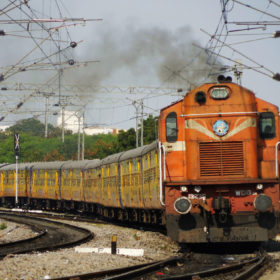
Indian Railways tenders 400 MW of grid-connected solar
Bidders have until September 16 to pitch for generation capacity which can be installed on vacant land owned by the rail company nationwide.
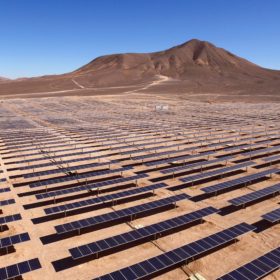
Plans unveiled for 1 GW solar-storage-hydrogen facility in China
Chinese developer Panda Green says it has negotiated exclusive rights to develop a $1.41 billion project in Xinjiang which will feature PV and photothermal generation, hydrogen production and energy storage.
A look at China’s PV poverty alleviation policy
A global research team says that China’s PV poverty alleviation scheme has ramped up disposable income levels in the country’s poorest counties. The Chinese government aims to install more than 10 GW of PV, especially in the most impoverished parts of eastern China, to help 2 million people by the end of this year.
Indian launches 10 MW solar tender in Rajasthan
The tariff ceiling has been fixed at INR3.20/kWh ($0.04) and the ground-mounted PV projects will be set up on a build-own-operate basis. The last day to submit bids is July 24.
India set for 10 GW of agricultural solar
The Indian state of Andhra Pradesh – which had commissioned an aggregate 3.53 GW of solar capacity as of May 31 – will set up the new plants to ensure nine hours of daily free power supply to the agricultural sector.

Chinese PV Industry Brief: 600 MW of unsubsidized PV in Shanxi, incentive cuts in Shanghai
Longi will build 600 MW of unsubsidized PV in Datong, Shanxi province. The Shanghai Development and Reform Commission, meanwhile, has unveiled new 2020-21 FITs. Yingli is undergoing restructuring, while Trina had a solid listing debut in Shanghai.

Italian government opposes large-scale PV development in historic Tuscia region
The Italian cabinet has accepted a request from the Ministry of Cultural Heritage and Activities to cancel approvals granted by the Lazio regional government for two large-scale PV projects. Lazio’s Tuscia area is a potential solar hub for the Italian energy system.
