
Construction begins on 12 MW Swiss alpine PV project
Work has begun on the Swiss Madrisa Solar project, a 12 MW alpine PV installation located at an elevation of 2,000 m near a ski resort of the village of Klosters. It is part of the Solar Express initiative designed to boost domestic winter energy production.
TOPCon IP battle intensifies with Qcells launching infringement notices
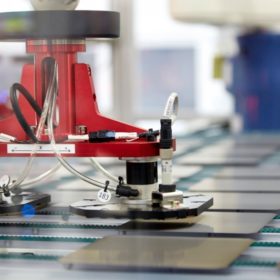
Qcells has launched an intellectual property (IP) dispute over alleged unauthorized use of its patented laser-enhanced contact opening (LECO) tech in tunnel oxide passivated contact (TOPCon) solar cells. The case underscores rising tensions in the PV industry over TOPCon patents.

Global solar module prices mixed on varying demand expectations
In a new weekly update for pv magazine, OPIS, a Dow Jones company, provides a quick look at the main price trends in the global PV industry.

Africa adds 2.5 GW of solar in 2024
The African Solar Industry Association (AFSIA) says utility-scale projects dominated Africa’s new solar additions in 2024, with storage installations surging tenfold.

UAE, Italy, Albania announce cross-border green energy cooperation plans
The United Arab Emirates, Italy, and Albania plan to cooperate on gigawatt-scale renewable projects in Albania and a cross-border transmission link to deliver power to Italy.
Wind tunnel tests show spacing between panels is key to reduce soiling
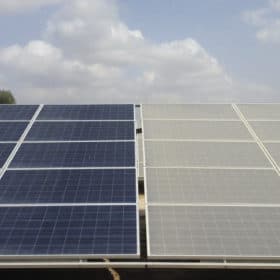
Scientists have placed four PV panels in a 21-meter wind tunnel and run different tests regarding tilt angles, mounting height, spacing, and incoming flow direction. They found that when the spacing between panels exceeds twice the panel height, the mutual influence on dust deposition becomes negligible.

Open-source dataset for rooftop PV generation in urban environments
A group of scientists has developed an open-source dataset comprising three years’ worth of data from Hong Kong’s largest behind-the-meter rooftop solar power project. Power generation was collected at 5-minute intervals, and meteorological data at 1-minute.
U.S. scientists building magnetocaloric heat pump with high system power density
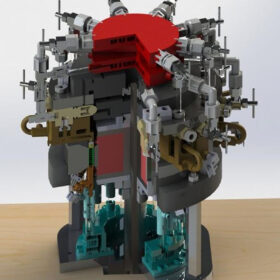
Developed at the U. S. Ames National Laboratory, the novel magnetocaloric heat pump utilizes gadolinium as the working medium and reportedly matches current vapor-compression heat pumps for weight, cost, and performance. The system is based on a packed-particle bed active magnetic regenerator, a magnetic source composed of permanent magnets and high permeability magnetic steel.

Solis releases three-phase string C&I inverters with fuseless design
The Chinese inverter said its new inverters have an MPPT current of up to 54 A and support more than a 150% DC/AC ratio. The new products also feature a maximum efficiency of 98.8% and a European efficiency rate of 98.3%.

Tunisia launches 200 MW solar tender
The Tunisian authorities have launched tenders for two 100 MW solar plants.
