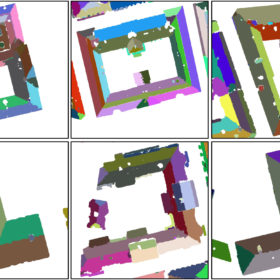
Novel methodology to identify solar-suitable roofs
Swedish scientists developed a three-step method that integrates techniques used for the automatic extraction of buildings along with their underlying roof faces, as well as the identification of utilizable rooftop areas for solar arrays. The novel methodology is claimed to avoid overestimating actual potential of buildings for PV deployment.

Venture capitalist sees billion-dollar opportunities for solar and storage innovators
Bill Nussey describes in his new book a much larger role that he foresees for local solar and storage, and a correspondingly altered role for electric utilities.
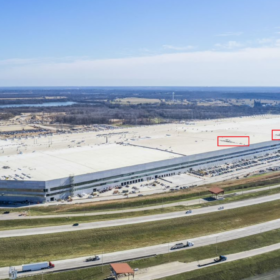
Tesla Energy results up, but mixed, for 2021; solar makes nary a sound on quarterly call
On the company’s Q4 earnings call, the world-leading EV manufacturer again prioritized delivering cars over growing low-margin energy storage products, while solar products were barely noted. Both verticals grew though, solar by 68% and storage by 32%.
European utilities, developers ask the EU to support creation of PV supply chain
A group of companies comprising Akuo Energy, Amarenco, BayWa re, EDF Renouvelables, Enel Green Power, Engie, Iberdrola and Vattenfall has sent a letter to the European Commission to ask for a strategy to build up a continental PV supply chain.
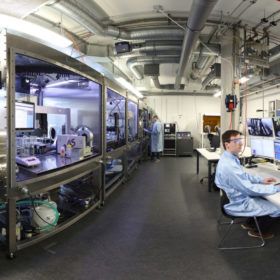
Perovskite solar cell with 1,400-hour stability at high temperatures
German scientists have developed a perovskite PV cell with remarkable stability by adding a bilayer of polymers that protects the perovskite from corrosion. This design helps to shield the extremely sensitive perovskite interface and provides the cell with extraordinarily high conductivity.
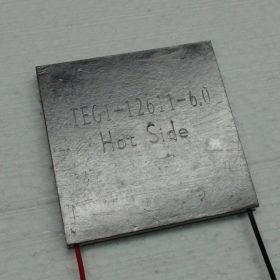
Coupling photovoltaics with thermoelectric cooling
An international research team has investigated how solar could be combined with thermoelectric coolers (TECs), which are small solid-state heat pumps used either for heating or for cooling. A system was built with six solar panels, an air duct system, four batteries, a charge controller, TECs, an inverter, heat sinks, a test chamber, and condenser fans.
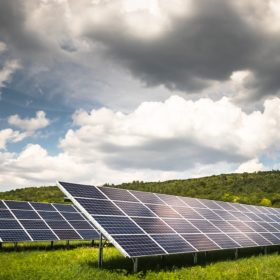
South Korea’s largest PV plant goes online
South Korean energy producer South-East Power has started operating a 150 MW solar plant in South Jeolla province. The project was partly backed by crowdfunding among local residents.
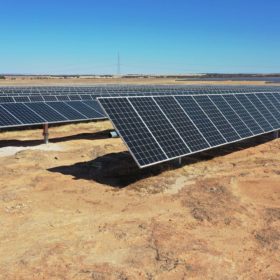
Western Australian solar farm leads way in performance stakes
SUN Energy’s 100 MW Merredin Solar Farm in Western Australia has emerged as the country’s best performing utility-scale PV project in 2021. International consultancy Rystad Energy says it has delivered an average capacity factor of 29.6% for the calendar year.
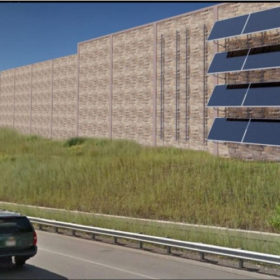
Solar noise barrier along highway in Massachusetts
A massive solar noise barrier in the US state of Massachusetts is expected to generate 802,000kWh of electricity per year, or the equivalent of annually supplying 120 homes with power.
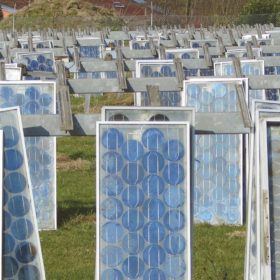
European Court of Justice: Solar manufacturers not liable for waste costs for panels shipped to EU before Aug. 2012
A preliminary ruling by the European Court of Justice states panel makers should not be responsible for electrical waste management costs in a seven-year period as the rules in place before the EU’s WEEE directive entered force, in 2012, permitted member states to place the obligation on panel users instead. The resulting change in law, in some states, cannot be applied retroactively, under EU legal rules.
