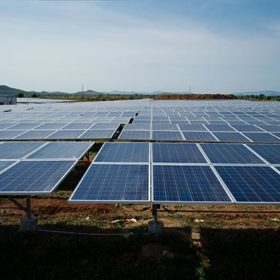
Tata Power secures 300 MW solar project from NHPC
Tata Power Solar has secured an engineering, procurement and construction contract for a 300 MW solar project under India’s Central Public Sector Undertaking scheme. The project, awarded by state-owned hydropower producer NHPC, will be located in the Indian state of Rajasthan.
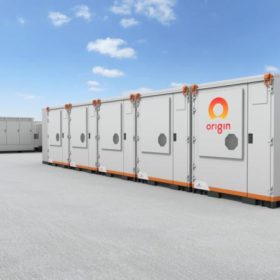
Origin secures approval for 2,800 MWh battery in Australia
Origin Energy has secured planning approval for a 700 MW/2,800 MWh grid-connected battery to be developed at the site of its coal-fired Eraring power station in the Australian state of New South Wales.
Global annual solar deployment to hit 1 TW by 2030
Major players in the solar industry, such as Longi Solar, are projecting accelerating growth over the near term.
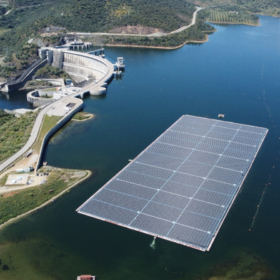
Storage-linked 5 MW floating PV plant goes online in Portugal
Portuguese utility EDP has switched on a new 5 MW floating solar array at the Alqueva hydropower dam.
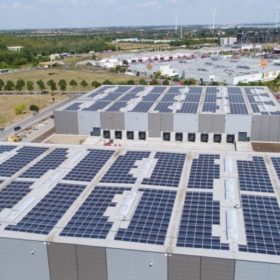
Germany concludes third rooftop PV tender with average price of €0.0853/kWh
Germany’s latest solar procurement exercise resulted in final prices of €0.07 ($0.073)/kWh to €0.0891/kWh.
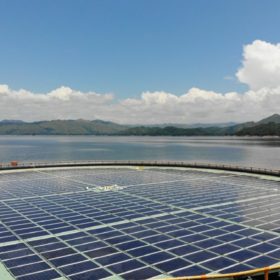
Small-scale floating PV with pumped hydro storage
Indian scientists have developed a system under which a pumped-hydro facility stores grid electricity during off-peak hours by pumping water to an upper reservoir. During peak hours, the system feeds the load, rather than taking power from the grid.
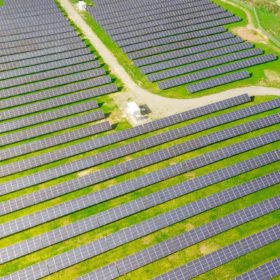
Global solar demand to reach 190 GW this year, says IEA
The International Energy Agency expects solar, wind power, and other renewable energy technologies to achieve triple-digit global growth this year, with new PV additions set to reach almost 200 GW.
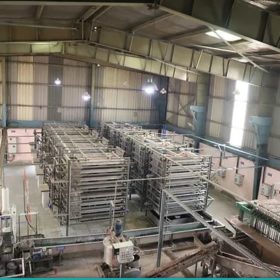
Emissions-free battery recycling facility will use electricity rather than smelting
ACE Green Recycling has announced plans to build a new plant in Texas to recycle both lead-acid and lithium-ion batteries.
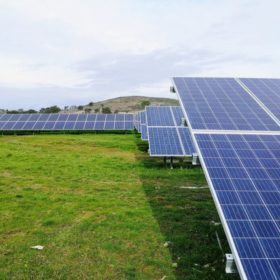
Aquila Capital confirms 1 GW solar PV pipeline for New Zealand
New Zealand’s transition to renewable energy has received a boost, as German investment manager Aquila Capital is teaming with renewable asset developer Far North Solar Farm to start construction on a 1 GW portfolio of large-scale PV projects.
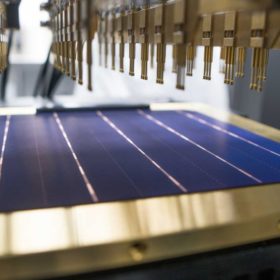
Trailblazer tipped to accelerate Australia’s clean energy transition
The University of New South Wales and the University of Newcastle have revealed plans to join forces to develop and commercialize “world-leading” technology in solar, renewable hydrogen, storage and green metals.
