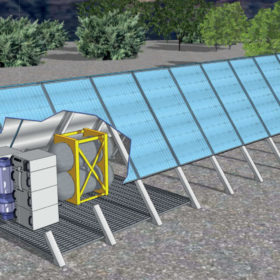
Solar-powered direct air carbon capture tech from Australia
Australian company AspiraDAC, which uses solar-powered Direct Air Capture (DAC) technology to remove carbon from the atmosphere, has been selected to be part of the first round of purchases from Frontier, a program backed by Facebook and Google’s parent companies, Meta and Alphabet.
Singapore regulator issues fresh appeal for clean power
The Energy Market Authority has already attracted proposals for 1.2 GW of renewable electricity, to be generated in four southeast Asian nations, and wants to raise that figure to 4 GW by 2035.
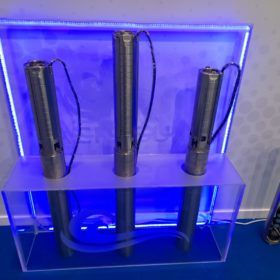
Novel photovoltaic water pump from Spain
A Spanish startup has developed a new pumping system that can operate in DC and AC modes. It can work for direct irrigation and with a water tank.

German consortium plans to build world’s largest heat pump
Basf and Man Energy announced a plan to build a 120 MW renewables-powered heat pump for steam production at an industrial site operated by Basf in the Rhineland-Palatinate region, Germany. The feasibility study for the project should be completed by the end of this year.
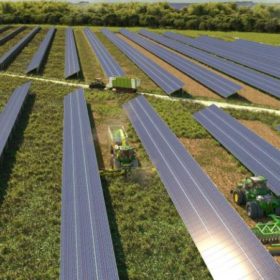
Agrivoltaics adding value to crops with low agricultural yield
A group of 35 French agricultural entrepreneurs decided to change their agricultural practices to adapt to the low quality of their groundwater and chose agrivoltaics as a way to compensate for crop yield losses.

EPC tender for solar-powered hydrogen project in Portugal
Hyperion Renewables launched an EPC tender for its Green H2 Setúbal Project back in March. Seven companies are now competing to build a plant with a green hydrogen production capacity of 135 kg (1,500 Nm3) per hour. The plant will be fed by 12 MW of solar PV.
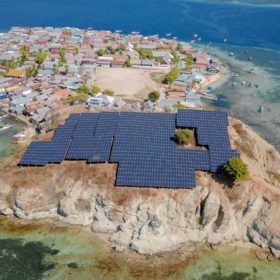
Solar-plus-storage for islands
Indonesian remote islands are increasingly resorting to solar-plus-storage to cover most of their electricity demand. According to new research from LUT University, combining PV with batteries may help islands to cover around 60% of demand with renewable energy.

Germany deployed 548 MW of PV in May
The cumulative capacity of all subsidized PV systems in Germany hit 59.3 GW at the end of May.
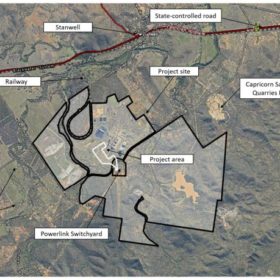
Australian coal power plant to host massive 1.45 GW/2.9 GWh battery
Queensland government-owned energy generator Stanwell has revealed plans to a build a massive 1.45 GW/2.9 GWh battery storage system alongside the coal-fired Stanwell Power Station in central Queensland as the state government looks to ramp up energy storage capacity to support the transition to renewables.

Agrivoltaics for hop growth
France’s Q Energy has developed a new way to combine solar generation and the cultivation of hops, which can grow up to 8 meters in height. The agrivoltaic system consists of two mounting units with 52 bifacial PV modules.
