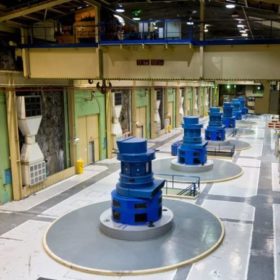
Australian duo make shortlist for 600MW green hydrogen project in New Zealand
Two of Australia’s most prominent energy players, Fortescue Future Industries and oil giant Woodside Energy, have been included on a shortlist of potential development partners for a proposed 600MW green hydrogen production and export facility on New Zealand’s South Island.
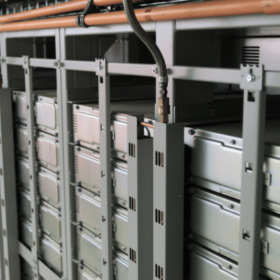
World’s largest lithium ion battery is down, again
The Moss Landing Energy Storage Facility Phase II in the United States set off fire alarms that activated a fault water suppression system, triggering a cascading set of events that resulted in roughly 10 battery packs melting down.
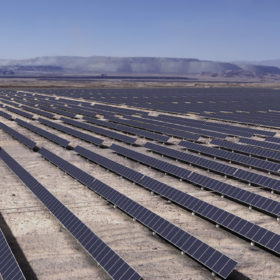
Chile launches 5.25GWh renewable energy auction
The Chilean energy regulator has launched an auction to supply electricity to the national system over a period of 15 years from 2027. The final results will be announced in the summer.
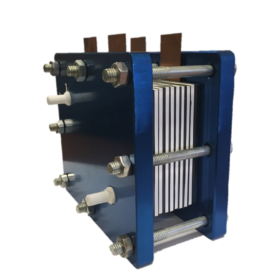
Viologen redox flow battery for renewables storage
Conceived for the storage of residential and large scale renewable energy, the device has a rated power of over 150mW/cm2, an energy density exceeding 40Wh/L, and a power density of 72.5mW/cm2. The battery was built with an anode made of inexpensive viologen and its cost, according to its creators, may be lower than $100/kWh.
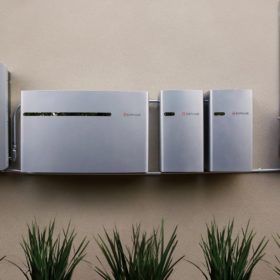
Enphase batteries to be used in US virtual power plants
Microinverter provider Enphase has signed a deal with Swell Energy to participate in distributed virtual power plants in California, New York and Hawaii.
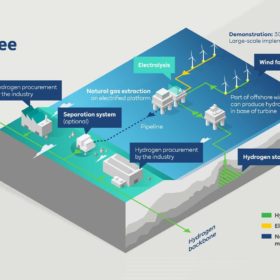
The Hydrogen Stream: Offshore green hydrogen project in the Dutch North Sea
As research into non-rare metal catalysts continues, companies in northwest Europe are working on an offshore green hydrogen demonstration project, the first European data center to run on green hydrogen, and on hydrogen-based solutions for container transport. Meanwhile, European institutions are prepping for stronger hydrogen collaboration with Africa.
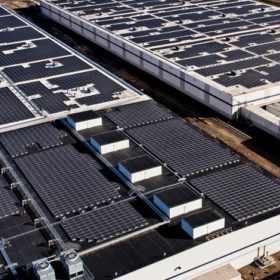
Solar power prices rising with demand
Recent BloombergNEF research shows that corporations procured a record 31GW of renewable energy in 2021, and LevelTen Energy says that growth occurred despite more than a year of price increases.
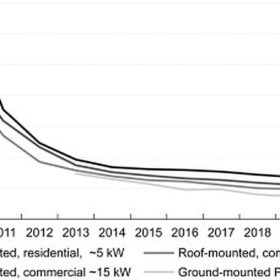
Large scale solar reaches €0.02737-04939/kWh LCOE in Sweden
New research from Sweden showed that financing conditions and the choice of location are crucial factors in reducing the levelized cost of energy for utility scale solar parks built without subsidies in the Scandinavian country. According to the researchers, the project with the lowest LCOE in Sweden, of €0.02737/kWh, is a plant with an expected lifetime of 45 years, a 2% annual degradation rate, capex of €703,758 per megawatt installed, a yearly fixed operations and maintenance cost of €11,277 per megawatt, and a nominal weighted average cost of capital per annum of 0.2%.
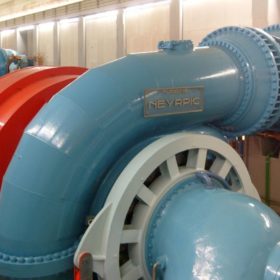
Ayana, Greenko partner on 6GWh of pumped-hydro storage
Greenko Group has agreed to provide Ayana with 6GWh of pumped-hydro storage capacity from its project in the Indian state of Andhra Pradesh.
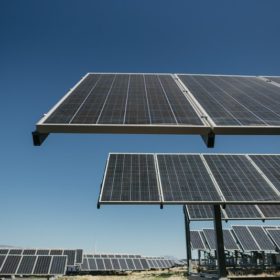
Argentinian oil supplier starts construction on 300MW solar park
The Parque Solar Zonda project is expected to be built by Yacimientos Petrolíferos Fiscales (YPF) in three 100 MW phases and to require a total surface of 300 hectares.
