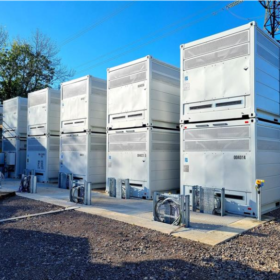
Canada’s largest solar-powered vanadium flow battery
Canadian companies Invinity and Elemental Energy are planning to couple a 21 MW solar plant under development in Alberta with 8.4 MWh of vanadium redox flow battery storage capacity.

EU Commission holds firm on taxonomy – nuclear power, gas to be seen as sustainable
Brussels is ignoring the requests of some EU member states, including Germany, as well as the assessments of experts. The German government has spoken out clearly against including nuclear power and gas-fired power plants in the EU taxonomy.

Lithuania devotes €40 million for solar rebates in 2022
The Lithuanian government has decided to increase the 2022 budget for the solar rebates by €35 million after the initial phases of the program showed strong success among homeowners.
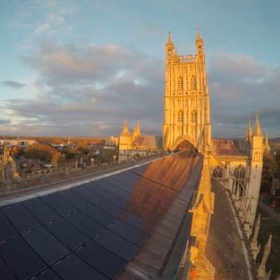
Solar for churches
Churches use energy mostly during the day, which makes them ideal buildings to deploy solar panels. Scientists in the United Kingdom have assessed the financial viability of a rooftop PV project for Bath Abbey and found that it could become profitable after 13 years.
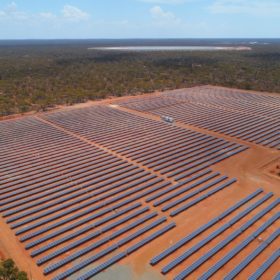
PV to deliver 100% renewables at Australian mine
Remote power generation specialist Zenith Energy will build upon its renewable energy options at Western Australian miner IGO’s Nova nickel site to demonstrate that it is possible to use 100% renewables to meet the demands of an operational mine site.
A battery is only as good as its control system
A possible failed bearing and a software programming error in a heat-suppression system caused a cascading incident that damaged 7% of Vistra Corp.’s Moss Landing Energy Storage Facility.
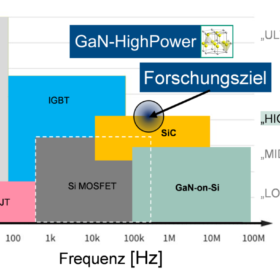
German consortium develops gallium nitride grid-supporting inverters
Researchers from German research institutes and companies are working on applying semiconductors based on gallium nitride (GaN) to string inverters with the aim of enabling cost and weight reduction while maintaining very high efficiency. These devices are expected to support grid operations through faster switching processes.
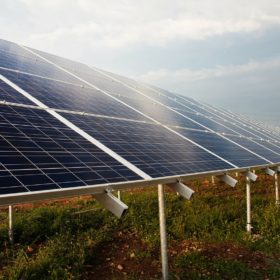
Indian state of Maharashtra launches 865 MW tender for small solar parks
The tendered capacity is expected to provide day-time power to agricultural consumers. The selected projects will range in size from 2 to 10 MW and will be awarded a 25-year power purchase agreement.
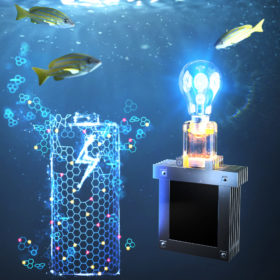
High performance seawater batteries based on novel anode material
Scientists in Korea have developed an efficient synthesis route to produce a novel co-doped anode material for rechargeable seawater batteries. They developed a one-step plasma-in-liquid process to synthesize nitrogen and sulfur co-doped carbon-based anode material, which displayed great potential for seawater batteries.
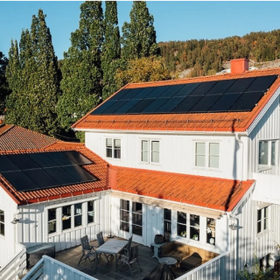
Norway increases support for residential PV
Norway’s clean energy agency Enova will increase the maximum PV system size eligible for rebates from 15 to 20 kW and the maximum subsidy amount from 1,250 to 2,000 NOK ($226.7) per kW installed. In addition, new subsidies of up to 10,000 NOK will be introduced for energy management systems that are often installed alongside solar arrays.
