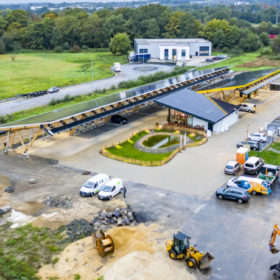
Solar-wind-storage EV fast charging for German highway
Fastned and Tesla have opened what they claim is the largest fast-charging park in Germany. Electric vehicles will be charged with green electricity – some of it from on-site solar and wind generation and the project includes 2 MWh of battery storage.
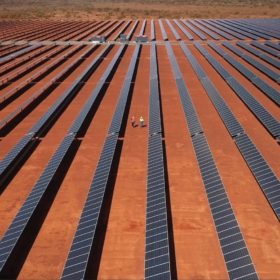
‘There has never been a better time for hybrid microgrids’
In a move that’s sure to pan out well for the Granny Smith gold mine in Western Australia, Aggreko has installed one of the country’s largest renewable energy microgrids, with 7.7 MWp of solar to be integrated with the site’s existing power station. pv magazine recently sat down with Karim Wazni, Aggreko’s managing director of microgrids and storage solutions, to discuss how microgrids and energy storage can help transition Australia’s resource sector.

US corporate solar market reaches 8 GW
The new Solar Means Business report by the Solar Energy Industries Association indicates that low prices and climate change commitments are driving corporate interest in solar and storage. Apple, Amazon and Walmart lead the list of top players.

Indian solar tenders to incentivize advanced local manufacturing
Policymakers could amend solar auctions to encourage manufacturing as the nation chases an aggressive solar target of 300 GW by 2030.
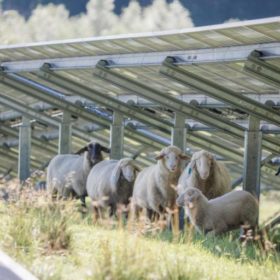
Austrian agrivoltaic project includes sheep farming
Maxsolar is building a ground-mounted, 11.5 MW solar plant near Wien where 150 Jura will graze.

Financial closing for 82 MW of PV in Guinea
German developer Clean Power Generation will build three PV plants in two different parts of the West African nation. All of the projects will sell electricity to state-owned utility Electricité De Guinée.
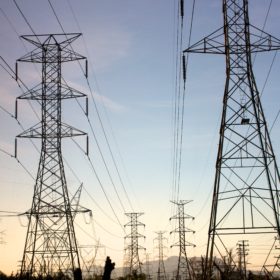
France’s ‘virtual power line’ takes shape
Nidec has deployed a 12 MW/24MWh storage system for French grid operator RTE. The battery – part of a 72 MWh project to prevent grid congestion in peak demand periods – is in an area with abundant renewables, including wind.

Floating solar nearing price parity with land-based US solar
Four years ago, there were just two floating solar arrays in the United States. But by the end of this year, there will be more than 20.
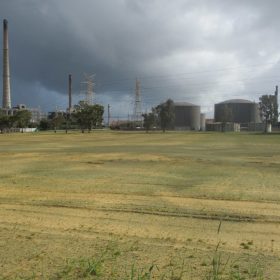
Australian utility to deploy 100 MW/200 MWh of storage at old power plant
The state government of Western Australia is expanding its range of solar-smoothing energy storage systems with plans to deploy a big project at the old Kwinana fossil fuel power station near Perth.

Concentrating photovoltaic-thermal system with 91% efficiency
A global research team has developed a parabolic trough linear concentrating photovoltaic-thermal system to produce heat and electricity, for both residential and large-scale applications. The PV unit relies on Azure Space’s multi-junction solar cells, based on indium gallium phosphide (InGaP), gallium arsenide (GaAs) and germanium (Ge).
