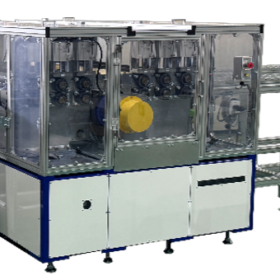
AGC, NPC developing new PV cover glass recycling tech
The Japanese companies announced a partnership to advance the recycling of solar panel cover glass for application in architectural flat glass production.

Ricoh developing perovskite solar technology for space, buildings
The Japanese imaging and electronics company said tests of its perovskite solar cell technology will be conducted in a demonstrator system aboard an unmanned cargo spacecraft operated by Japan Aerospace Exploration Agency.

Four-year testing finds heat pumps run efficiently even in older homes
Researchers at Fraunhofer ISE have tested various types of heat pumps in existing buildings across Germany over four years, finding that the systems achieved seasonal performance factors between 2.6 and 5.4. The team also showed that PV-driven heat pumps can boost self-consumption rates, particularly when paired with battery storage.

GoodWe debuts PV-driven heat pump water heaters
The Chinese manufacturer said their new residential heat pump water heaters deliver a coefficient of performance of up to 4.2, with a heating capacity ranging from 4.5 kW to 5 kW. The units are available with water tanks in 200 L, 300 L, and 500 L sizes.

Crystalline silicon vs. thin film at high latitudes
A four-year analysis conducted at a testing field in eastern Poland has shown that crystalline solar panels offer a stronger performance than thin-film panels at high latitudes. The tests revealed pronounced seasonal variability across all technologies, with thin-film modules showing markedly lower capacity factors than crystalline silicon, particularly in winter.
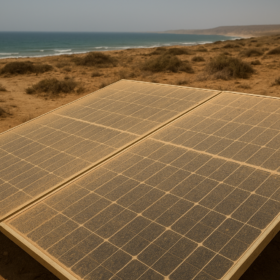
The impact of dust on PV systems in arid coastal environments
A Saudi–Egyptian research team investigated the effects of four types of dust on photovoltaic panels in arid coastal environments, finding that power losses can reach up to 48%.

Cambridge scientists discover photovoltaic properties in organic radical semiconductor
The researchers said their new discovery could open the way to the manufacturing of simpler solar panels made from a single material.

Longi reveals back-contact PV test results from offshore environments
The Chinese manufacturer claims back-contact Hi-MO 9 modules outperformed TOPCon counterparts in a six-month offshore test, showing higher power yield, better low-light performance, and lower operating temperatures.
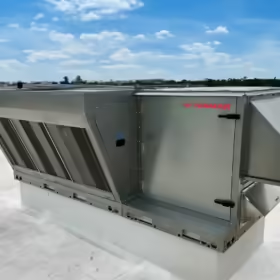
Japanese manufacturer launches dual-fuel commercial rooftop heat pump
Japanese machinery maker Yanmar says its new commercial rooftop units (RTUs) include a standard model, a dual-fuel heat pump, and a dedicated outdoor air system (DOAS) with integrated energy efficiency ratios (IEER) up to 21.3.
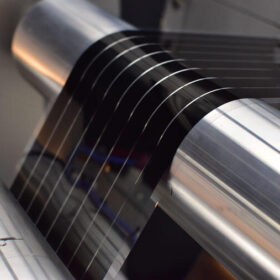
Japanese utility invests in perovskite solar PV startup
J-Power announced an investment in US-based perovskite solar specialist Active Surfaces, along with plans to pilot product tests.
