
Novel swapping technique for partially shaded PV systems
Researchers in India have developed an algorithm for quadrant swapping in PV arrays, enabling the creation of new quadrants containing either shaded or unshaded modules. The method was tested across ten shading scenarios with varying irradiation levels and demonstrated “superior” performance compared to conventional approaches.
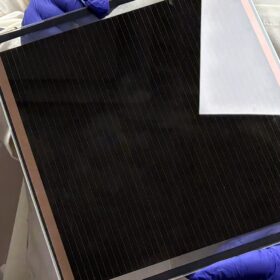
Sofab Inks achieves 22.2% efficiency in mini inverted perovskite solar panel
The U.S. startup said the 30 x 30 cm perovskite solar cell device featured its tin oxide electron transport material produced in a sheet-to-sheet slot die coating process.

High-rise buildings could soon use gravity energy storage, say researchers
Researchers in Canada have proposed using gravity-based energy storage in high-rise buildings, in combination with photovoltaic facades, small wind turbines, and lithium-ion batteries. Their modeling indicated that this hybrid system could achieve a levelized cost of energy ranging from $0.051/kWh to $0.111/kWh.
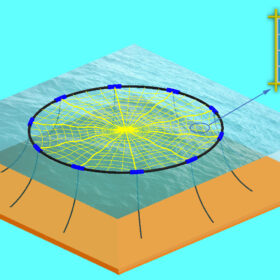
Floating photovoltaics based on spiderweb design
Scientists in the United Kingdom have developed a new web-inspired concept for floating PV farms, modeled after spider webs. The system is said to be particularly suitable for spiral and radial configurations, as well as for deployment between offshore wind farms.

Prototype magnesium battery operates at room temperature in breakthrough
New research reopens the question around magnesium-based battery viability at room temperatures.
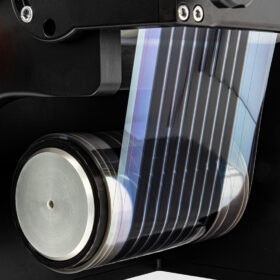
Market trust key for perovskite solar commercialization
In a new perspective paper, researchers from Dresden University of Technology and Denmark’s InfinityPV analyzed scientific research and more than 100 companies involved in organic PV and perovskite solar cell manufacturing. Their findings show that the commercialization of these technologies depends on the PV industry’s ability to increase financial transparency.
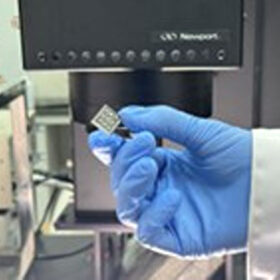
Scientists hit 9% efficiency record for antimony sulfoselenide solar cell
Developed by an international research team, the cell features a cadmium sulfide electron transport layer produced using a novel ozone-doping strategy. This treatment enhances material purity and stability while widening the energy bandgap of cadmium sulfide.
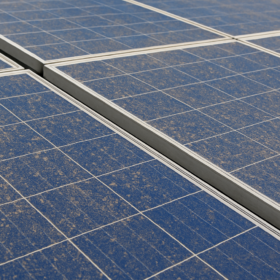
Low-cost, inverter-based dust monitoring method for rooftop solar
Researchers in China have developed a dust monitoring technique that relies solely on the existing hardware resources of inverters, without requiring extra sensors or meteorological data. Tests on real rooftop PV arrays demonstrated an accuracy exceeding 96%.”
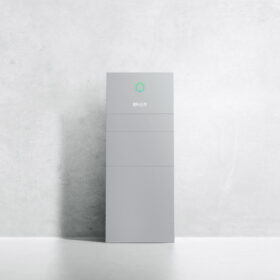
WHES releases all-in-one home storage system
The single-phase system delivers an output ranging from 3,680 W to 10,000 W and offers a storage capacity between 4.992 kWh and 19.968 kWh. The new product is based on LFP batteries.
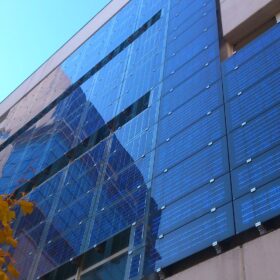
Battery storage boosts viability of south-facing solar facades
Researchers in Germany have examined how battery storage could help façade PV systems move beyond their niche market by 2030. Their findings show that a large majority of south-oriented façades in Europe could be equipped with vertical solar arrays combined with batteries.
