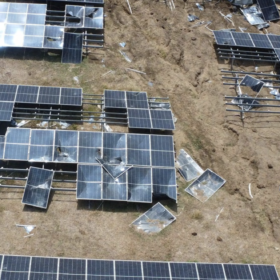
Field-tested hurricane survival strategies for solar
Rocky Mountain Institute (RMI) has published “Solar Under Storm III,” analyzing hurricane impacts on solar farms in the Caribbean after Hurricane Beryl and identifying key failure modes and risk-mitigation measures.
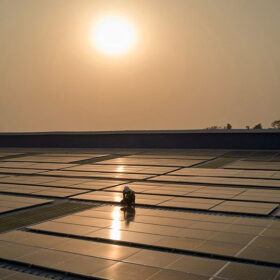
Nigeria’s C&I solar plans under a cloud of diesel
A new approach aims to reconnect commercial and industrial (C&I) energy users to the grid, supplying daytime power from solar and batteries through grid infrastructure funded by PV installers, with diesel as a backup when needed.
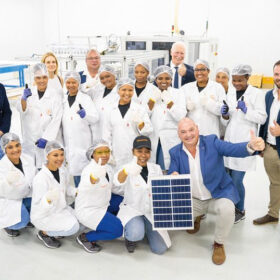
The green jobs promise
Promising to replace fossil fuel jobs with an identical number of clean energy roles in coal-dependent communities is overly simplistic and ignores the fact that communities need to be brought onside with credible expectations of better-quality employment.
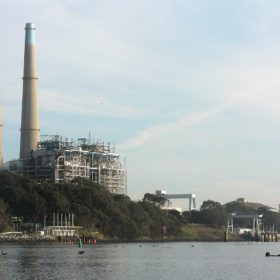
How does the US retire 236 GW of coal and 1,000 gas peaker plants?
Victory in the economic realm (increasingly the case with solar, solar-plus-storage and wind) is no guarantee of market victory if the regulations are stacked against renewables.
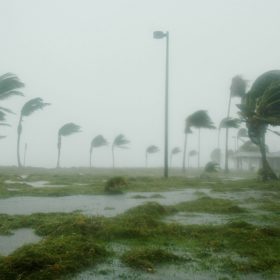
PV systems could provide up to 60% of output during hurricanes
Researchers in the U.S. have demonstrated, using simulations, PV system generation can range from 18-60% of clear-sky potential during hurricanes – provided the arrays do not suffer damage. According to them, solar installations could continue to provide back-up power when grids are down during hurricanes, especially if coupled with energy storage.
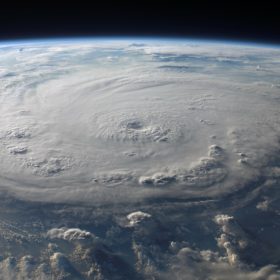
How to make rooftop PV resilient in hurricane regions
A report published by the Rocky Mountain Institute makes recommendations for rooftop PV in regions affected by high winds. The study draws on the knowledge of structural engineers asked to analyze 25 solar systems across five Caribbean islands after they were hit by major hurricanes in 2017 and last year.
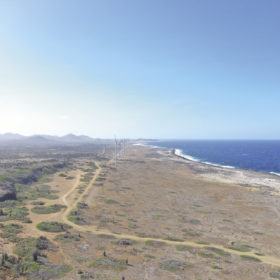
Rebuilding for resilience
The islands of the Caribbean have been focusing on the deployment of storage solutions, minigrids and microgrids in response to the damage their power systems suffered during the 2017 hurricane season. But with the opportunities, there are also challenges.
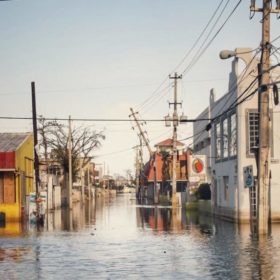
Energy access for Puerto Ricans after Hurricane Maria
In this op-ed for pv magazine, Roy Torbert and José Juan Terrasa-Soler, of the Rocky Mountain Institute and Resilient Power Puerto Rico, respectively, analyze the cost of Puerto Rico’s energy recovery and the role that microgrids play in reconstruction and resiliency.
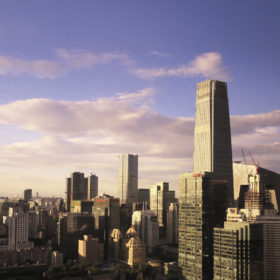
Putting China’s electricity market reforms on the spot
A report by the U.S.-based Rocky Mountain Institute has modeled scenarios for the deregulation of electricity markets in China. The report finds the implementation of a spot market would drive increased integration of renewables and provide significant reductions in costs and emissions.
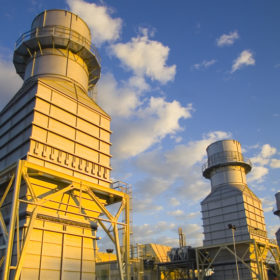
US: Rush to gas risks hundreds of billions in stranded assets
A new report by Rocky Mountain Institute finds that gas plants proposed across the United States over the next 15 years could be replaced by clean energy portfolios at a net savings, and that these projects are at risk of becoming stranded assets.
