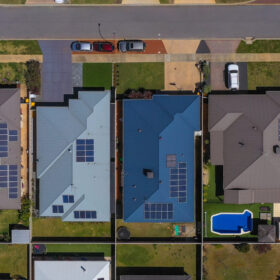
Rooftop solar rebounds in Australia, home battery demand surges
Australia’s rooftop solar market has bounced back into record-setting territory with 281 MW of new capacity registered across the country last month, marking the largest February total on record.

Photovoltaics reach 16.1% share of Germany’s electricity generation in 2025
Germany’s Federal Statistical Office (Destatis) says solar generation rose to 70.1 TWh in 2025, up 17.4% from the previous year, even as wind and hydropower output declined and natural gas generation increased 10.2%.

Private wires legislation could slow Ireland’s residential rooftop PV progress
Solar Ireland told the Irish government that the Private Wires Bill’s proposed definition of private wires could bring rooftop solar installations within a full electricity licensing requirement, which would place significant additional demand on the energy regulator and slow down installations.
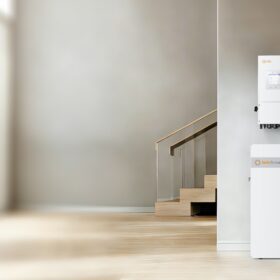
Solis launches new residential storage system portfolio
The Chinese manufacturer said its new three residential battery lines support a depth of discharge of 90% and deliver over 6,000 cycles.
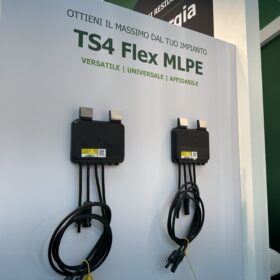
Tigo debuts 725 W optimizer for high-power solar modules
The new product has a maximum wattage of 725 W, a maximum current of 22 A, and a maximum efficiency of 99.6%.
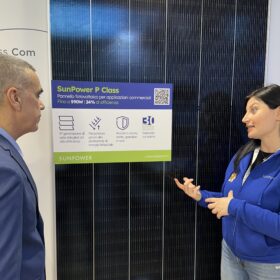
TCL Sunpower presents shingle TOPCon solar panels for rooftop PV
The Chinese manufacturer expanded its P Class portfolio with two new shingled-module series for residential and commercial rooftop installations. Both lines feature high-density, multi-busbar shingled cells for improved shade tolerance and long-term reliability with 30-year warranties.
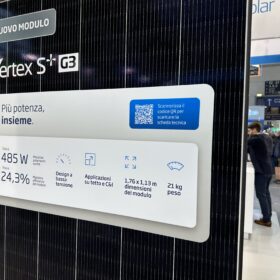
Trina Solar unveils 485 W TOPCon PV panel with 24.3% efficiency
The Chinese manufacturer has launched its third-generation Vertex S+ G3 dual-glass TOPCon modules for residential and commercial applications. The new products feature upgraded module architecture and a temperature coefficient if -0.26% per C.
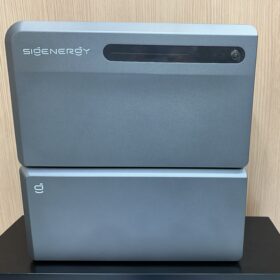
Sigenergy unveils 2.68 kWh battery for balcony PV
Sigenergy has launched a 2.68 kWh balcony storage system with four MPPTs and up to 4 kW of PV input. The scalable LFP solution offers 800 W grid output, 1.2 kW backup power, and expansion up to 18 kWh per tower.
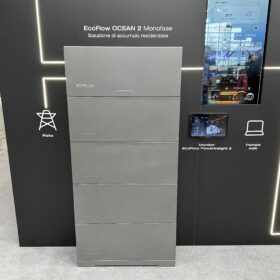
Ecoflow debuts 5 kWh residential inverter battery with 100% depth of discharge
EcoFlow has unveiled the single-phase Ocean 2 all-in-one battery inverter at Key Energy in Rimini. The system features a more compact 5 kWh LFP battery stackable up to 30 kWh and offering 100% depth of discharge, 3.4 kW discharge power, and IP66 protection.

Optimizing solar EV stations for maximum impact
A new report from the International Energy Agency Photovoltaic Power Systems Programme (IEA PVPS) Task 17 outlines how photovoltaic systems can be effectively integrated with electric vehicle charging infrastructure through optimized sizing, intelligent control, and site-specific design.
