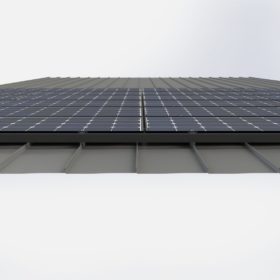
Module skirt for PV arrays built on seam metal roofs
The PVonceal module skirt protects all of a module’s electrical components while maintaining sleek aesthetics for the lifetime of the installation.
U.S. decarbonization goals hinge on scaling up heterojunction solar cell tech
HJT technology could fill an innovation gap in the residential and commercial rooftop PV market, and boost U.S. solar leadership through domestic manufacturing of cells and modules.
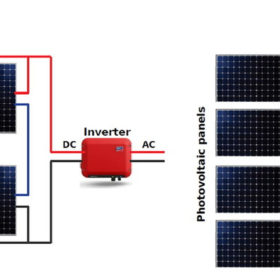
Micro-inverters vs. string/central inverters
A French research group has compared the performance ratio of 100 PV systems relying on micro-inverters with that of 100 installations relying on string/central inverters. It found the performance ratio is around 79% for both system typologies and that arrays with micro-inverters are more sensitive to environmental factors.

‘Italy needs own supply chain to navigate raw materials crisis’
Paolo Rocco Viscontini, president of trade association Italia Solare, has spoken to pv magazine about the challenge high system prices pose to Italian solar and discussed the nation’s ‘super bonus’ tax deduction, which remains the main market driver for small scale arrays.
France deployed more than 2 GW of PV in first nine months of 2021
The country’s cumulative PV capacity reached 13.3 GW at the end of September. This year’s growth was triggered by a strong increase in utility-scale solar projects.

Poland may reach 30 GW of solar by 2030
The Eastern European country is expected to reach 10 GW of solar capacity by the end of 2022, according to the Polish research institute Instytut Energetyki Odnawialnej. This projected growth should materialize despite a strong contraction in the distributed generation segment.
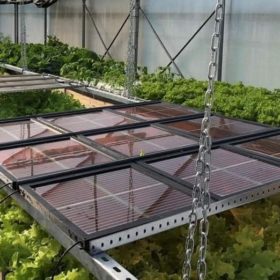
Semi-transparent solar module for greenhouse applications
Manufactured by scientists in Italy, the 3.88%-efficient organic solar panels are able to filter the light from the roofs of greenhouses. They are also capable of supplying a portion of the electricity required to power the greenhouse’s temperature and humidity sensors.
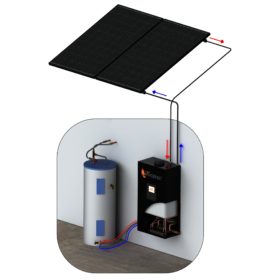
Solar heat pump solution for water, pool heating
U.S. solar thermal specialist Fafco is set to launch a new photovoltaic-thermal heat pump solution for water and pool heating. The system consists of photovoltaic-thermal panels, a 5 kWh thermal battery with a heat pump, and an electric hot water heater.
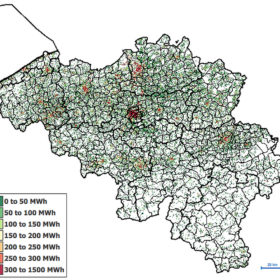
Belgium’s rooftop solar potential estimated at 99.6 GW
According to recent analysis by Belgian institute EnergyVille, rooftop PV and onshore wind have the technical potential to reach 118 GW of capacity in Belgium. Of the three Belgian macro-regions, Flemish-speaking Flanders is the one with the largest solar potential for rooftop systems, at 67.56 GW, followed by French-speaking Wallonia, with 31.54 GW, and the Brussels metropolitan region, with 4.23 GW.

New German government coalition wants to deploy another 143.5 GW of solar this decade
The new plan would require the deployment of around 15 GW of new PV capacity each year to 2030. The agreement also includes the gradual phasing out of all coal power plants by the end of the decade.
