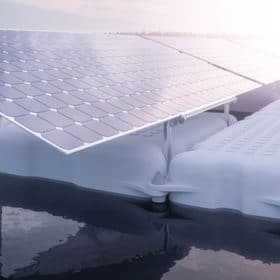
Big solar for Western Balkans disused coal mine
Land scarcity and renewables prices have been long considered significant hurdles for renewable developments in the hilly Balkans. Still, the European Bank for Reconstruction and Development (EBRD) sees solid opportunities in floating PV on public dams, PV modules on rooftops, and renewables projects in landfills and disused coal mines.
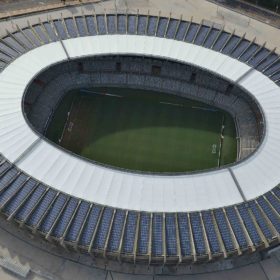
Australian sport’s 20,000 MWh goal
The Australian Conservation Foundation has launched a new campaign to inspire sporting venues and clubs to go solar.
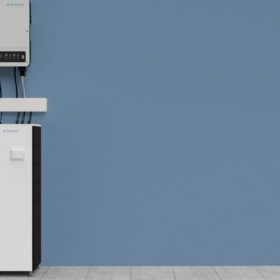
New battery for residential and commercial storage from Germany
Manufactured by Germany’s Fenecon, the modular battery has a storage capacity ranging from 8 kWh to 22 kWh. The product is claimed to allow predictive, grid-friendly charging and discharging.

South Korea kicks off 2 GW PV tender
The Korean Energy Agency has included PV projects exceeding 20 MW in size for the first time in its solar energy procurement scheme. Selected projects will be awarded a fixed rate under a 20-year contract under the country’s renewable energy certificate (REC) scheme and will sell electricity to local power distributors.

Solar 101: Working the angles to maximize your solar system’s output
As a case study, the town of Normal, Illinois, shows how a roof’s latitude, pitch, and azimuth can affect energy output.
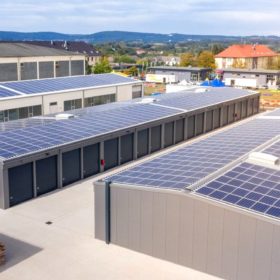
Germany installed 548.6 MW of PV in March
In the first three months of 2021, newly installed solar capacity reached 1.42 GW.

The father of Spain’s solar tax works, now, for a PV company
The former Spanish industry minister, José Manuel Soria, has become the president of Island Green Power España SL, the Spanish unit of U.K.-based developer of large photovoltaic plants, Island Green Power.

Italy devotes €1.1bn to agrivoltaics, €2bn to energy communities and storage
The funds will be part of the EU Covid-19 recovery package. Overall, the Italian government expects to deploy 2 GW of agrivoltaics and 2 GW through energy communities.
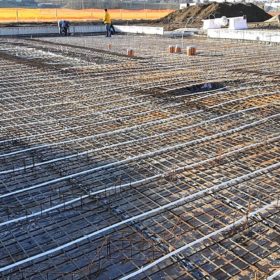
Excess PV power to activate floor heating in commercial buildings
Austrian heat and PV specialist my-PV is proposing a new solution to use surplus PV electricity for thermal concrete-core activation in commercial buildings.
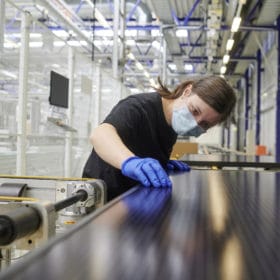
Meyer Burger unveils 400 W heterojunction solar module
The solar module will be available in three versions – white, black, and glass-glass. The products have an output of up to 400 W, but when the bifacial effect is optimally used, the output of the glass-glass module can reach up to 430 W. Both the white and black modules weigh less than 20 kg
