
Dutch PV sector calls for consumption incentives as end of net metering looms
Dutch trade body Holland Solar is urging the new Dutch government to introduce self-consumption incentives for batteries, boiler tanks, and heat pumps used in combination with PV systems, as the country plans to phase out net metering by 2027.

Japan’s oldest PV system gets refurbished
Tokyo-based startup Girasol Energy and the enterprise bureau of Japan’s Yamanashi prefecture have repowered Japan’s oldest PV system, a 100 kW array built in 1993. The project aimed to partially replace the original 13.3% efficient solar modules, offering an alternative to dismantling and recycling the system’s components.
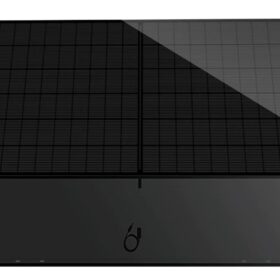
Gstar introduces 440 W TOPCon solar module with framless design
The Singapore-based manufacturer said its new panel can achieve self-cleaning through rainwater thanks to its frameless design. The new product features an operating temperature coefficient of -0.30% per C and an efficiency ranging from 21.51% to 22.53%.

Duffing oscillator can increase low output voltages in PV systems at dawn, sunset
Scientists have utilized a device based on the Duffing oscillator to solve the problem of PV systems’ low efficiency at low input voltages at dawn and sunset. Its performance was reportedly better than that of a conventional DC-DC boost converter in amplifying weak input voltages.

US solar generation strong outside Hurricane Milton’s localised impacts
In a new weekly update for pv magazine, Solcast, a DNV company, reports that the impact of Hurricane Milton on solar production will be minimal outside the southeastern United States, as the system quickly moves offshore.

IEA-PVPS report shows record year for US solar in 2023
The latest report from the International Energy Agency (IEA) Photovoltaic Power Systems Programme (PVPS) says solar records were broken across the United States in 2023, as international trade issues decreased and financial certainty increased, driven by the implementation of the US Inflation Reduction Act.
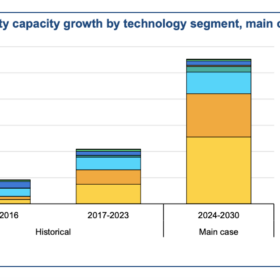
IEA forecasts over 4,000 GW of new solar by 2030
The International Energy Agency says renewables are on course to meet almost half of global electricity demand by 2030, with solar accounting for 80% of the growth in capacity.

Lebanese sources confirm just one damaged PV array after reports of blasts
Lebanon’s National News Agency (NNA) has reported that “several” solar arrays have been linked to a second wave of electronic-device explosions across the nation, but local sources have thus far only identified one damaged PV system, which they said was likely affected by external factors.
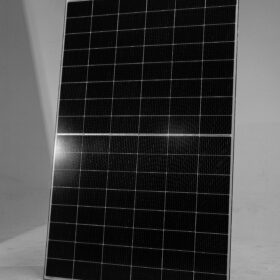
Cando Solar unveils frameless 450 W heterojunction PV panels with 22.6% efficiency
The Chinese manufacturer says its new frameless heterojunction panels rely on busbarless technology and 210 mm wafers. The new products also feature a temperature coefficient -0.29%/C and weigh only 12.3 kg.

Czechia planning retroactive cuts to feed-in tariffs for PV systems
The Czech government is trying to retroactively reduce feed-in tariffs (FITs) granted for PV projects between 2006 and 2013. The local solar sector has criticized the move, claiming that it could incite panic among investors.
