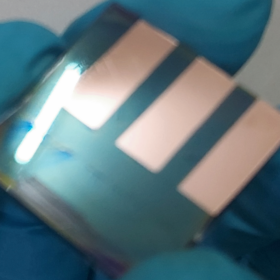
Reduced graphene oxide boosts stability in perovskite solar modules
Indian scientists have fabricated perovskite mini-modules with reduced graphene oxide interface engineering, achieving 16.6% efficiency and over 1,300 hours of stable operation. The graphene oxide layer improves film quality, reduces defects, enhances charge transport, and enables scalable fabrication, offering a promising route toward efficient and durable perovskite solar modules.

Solar PV, geothermal hybrid systems are more than niche solutions
Solar energy, driven by excellent resource conditions and rapidly improving economic attractiveness, is expected to emerge as a bulk energy supplier in future energy systems. The self-limiting effects of solar power can be circumvented through solar-hybrid solutions, such as PV-geothermal hybrid configurations.
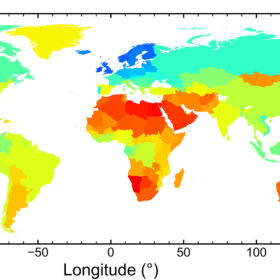
Solar PV Capex could fall to $192/kW by 2050
A review of 60 renewable energy studies finds that by 2050, solar PV and wind could supply 80–100% of electricity, but overly conservative Capex assumptions and simplified PV modeling often underestimate deployment potential. While future PV costs depend on supply chains and geopolitical risks, historical experience suggests medium-term risks are manageable, and material constraints are being resolved.
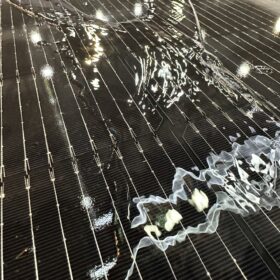
Internet-of-Things could bring solar module water cooling closer to commercial viability
A Czech team developed an IoT system using MQTT to autonomously cool PV panels, boosting daily energy yield by 7.38% with a positive net energy balance.
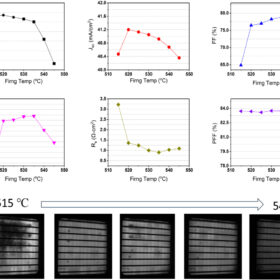
U.S. scientists build copper-contacted TOPCon solar cell with 24.3% efficiency
The TOPCon solar cells with fabricated with screen-printed, fire-through copper rear contacts and silver front contacts, using laser-enhanced contact optimization (LECO) to significantly reduce contact resistivity. Optimized copper cells achieved 24.3% efficiency, comparable to Ag-contacted cells, with excellent stability.

How to delaminate end-of-life solar modules with ultrasonic cavitation
A research team has developed a solvent-free method using ultrasonic cavitation to delaminate end-of-life crystalline-silicon PV modules, fully separating the glass and front EVA layer while partially releasing c-Si fragments. The proposed approach achieved an 82.2% mass-based delamination efficiency, highlighting ultrasonic cavitation as a sustainable alternative for PV module recycling.
Solar keeps slimming down while power rises
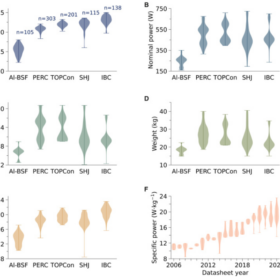
An international study found that the specific power of commercial silicon solar modules increased from 8.5 W/kg in the early 2000s to 23.6 W/kg today, driven by advances in module design, bifaciality, and temperature management. The researchers highlighted that glass and framing dominate module weight, and considering operating conditions like nominal operating cell temperature and rear-side illumination is essential for accurate PV system design.
PV-driven hydraulic hydro storage may hit $0.022/kWh LCOE in the U.S.
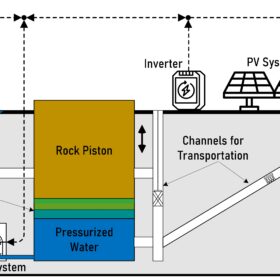
An international study has demonstrated that utility-scale solar PV paired with hydraulic hydro storage (HHS) could reach an LCOE as low as $0.022/kWh in select U.S. regions. The system could provide GWh-scale, cost-competitive, and highly reliable long-duration storage, capable of powering large commercial districts with minimal environmental impact.
The impact of annealing on copper-plated heterojunction solar cells
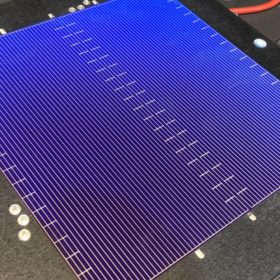
A UNSW-led team found that annealing conditions significantly affect stress, strain, and microstructure in copper-plated heterojunction solar cell contacts, with fast annealing increasing microstrain in both copper and indium tin oxide.

How much agrivoltaic shading is enough
Spanish researchers found that semi-transparent silicon PV greenhouses boosted tomato fruit weight by 25% while generating 726.8 kWh over two seasons, outperforming cadmium telluride PV and shaded controls. The PV-Si system balanced sunlight, temperature, and energy, showing strong agrivoltaic potential.
