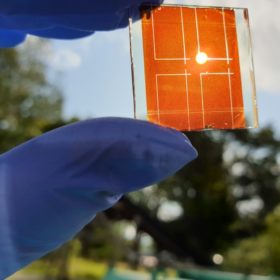
India and Israel to work together on perovskite solar cells and lithium sulfur batteries
Low-cost batteries and novel perovskite materials are among the topics selected for joint research and development.

Large-scale PV plant planning for weak power grids
Researchers in New Zealand have developed a new methodology for solar park planning that considers clear-sky radiation for voltage stability analysis. It is based on two different generation profiles for separate purposes.
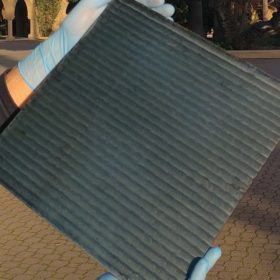
New manufacturing process for 15.5% efficient perovskite solar panels
Stanford scientists have used a robotic device with two nozzles to quickly produce thin films of perovskite. With these films, they have manufactured perovskite cells and modules with efficiencies of 18% and 15.5%, respectively. According to them, this technique may enable the production of perovskite modules at a cost of around $0.25 per square foot.

Ever heard of photovoltatronics, the new frontier of solar in urban environments?
Scientists in the Netherlands are planning to build intelligent PV devices for energy and information applications. Their intention is to make this approach a new field of PV research, whose ultimate goal is enabling solar cells to communicate with each other and with other devices, ensuring that all the generated energy ends up exactly where it’s needed, especially in the urban environment.
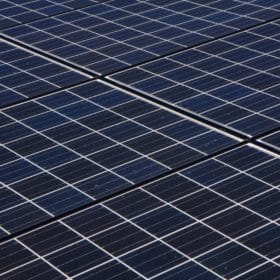
Online algorithm to estimate open-circuit voltage in PV systems
The new technique, proposed by researchers in Pakistan, is claimed to estimate the voltage, current and temperature of a PV system without interrupting the power flow to load.
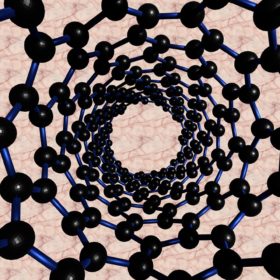
Carbon nanotubes in search of a solar niche
A group of German scientists has analyzed the possible trajectory of carbon nanotubes (CNTs) in photovoltaic research and industry and has suggested a roadmap to bring this technology closer to mass production. Despite a large number of challenges, the academics predicted a brilliant future for CNTs in PV applications, explaining that the barriers to their adoption are constantly being reduced.
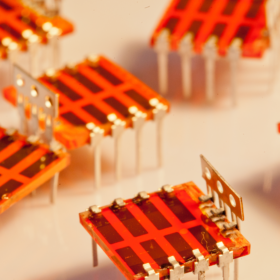
Indoor solar cells based on lead-free perovskite-inspired materials
Lead-free perovskite-inspired materials still provide efficiencies that are too low for solar cells in outdoor environments. A British-Chinese research team, however, has demonstrated they have strong potential for indoor PV devices due to their ability to capture visible light.
Even if it is cheap enough, efficiency does matter
A British-German research team claims that organic PV technologies may become mature enough to compete with crystalline silicon and thin-film products not only in BIPV, but also in power generation in the electricity market. In order to get there, however, organic PV products will have to achieve higher efficiencies.

Solar for trekking
Belgian start-up Sunslice has developed small, portable, high-performance solar panels that can be applied to backpacks and be used as rechargers for smartphones and watches.
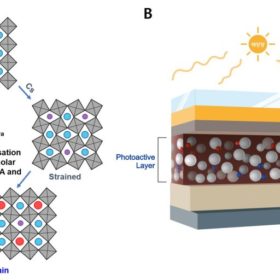
25.17% efficient perovskite solar cell via new photoactive layer
Scientists in South Korea demonstrated a perovskite cell with a certified efficiency of 24.4%. The device is claimed to maintain over 80% of its initial efficiency after 1,300 hours in the dark at 85 degrees Celsius.
