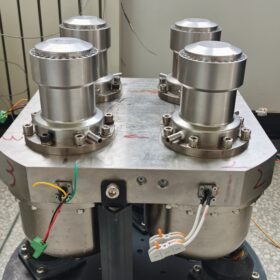
Chinese scientists unveil thermoacoustic ultra-high temperature heat pump prototype
Researchers at the Chinese Academy of Sciences developed a thermoacoustic Stirling heat pump prototype that offers high thermal performance, a peak coefficient of performance of 1.68, and potential applications in high-temperature industrial processes, enabling zero-carbon heating for sectors like petrochemicals and metallurgy.

The impact of laser-assisted firing on TOPCon solar cell performance
UNSW and Jolywood studied the thermal stability of laser-assisted fired TOPCon solar cells during module fabrication and high-temperature stress, identifying hydrogen-related defect dynamics as the key factor behind degradation and recovery. They found lamination causes temporary efficiency losses that self-recover under light exposure, while optimized LAF can restore degraded contacts, providing practical guidance for reliable module manufacturing and testing.

Germany brings world’s first supercapacitor STATCOM online
Germany has connected the world’s first supercapacitor-based STATCOM to the grid, with Siemens Energy and transmission system operator TenneT positioning it as a blueprint to replace fossil-fuel generators in providing instantaneous reserve and reactive power.

China National Petroleum Corporation achieves 25.05% efficiency for inverted perovskite solar cell
The Chinese energy and oil company said the cell can be used as a top device in perovksite-silicon tandem configurations. The result was confirmed by the Shanghai Institute of Microsystem and Information Technology (SIMIT).

Interspace single-axis agrivoltaics has lowest environmental impact in Europe
A group of scientists has simulated fixed vertical, interspace and overhead single-axis as well as overhead dual-axis agrivoltaic systems for 30 years and has found interspace single-axis system emerged as the most environmentally favorable configuration in Europe.

Solinteg releases new hybrid inverter series
The M2HT series has an output range of 75–125 kW and is the company’s first product in the 125 kW power class.
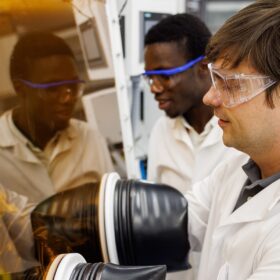
How to reduce ionic losses in tin-based perovskite solar cells
Researchers in Germany have developed a DMSO-free fabrication process for tin-based perovskite solar cells that dramatically reduces ion density – over tenfold lower than in lead-based devices – leading to improved stability.

The thermomechanical impact of plated copper contacts on heterojunction solar cells
UNSW researchers have found that annealing copper-plated contacts in heterojunction solar cells creates only localized stress. Their analysis also showed that, at typical annealing temperatures around 200 C, the probability of silicon fracture is very low.

Solar powers the warfighter
2026 Defense authorizations highlight the need for U.S.-made photovoltaics in satellites to compete with foreign adversaries, writes Rob Gardner, vice president, congressional and regulatory affairs, for the SEMA Coalition.

Perovskite-silicon tandem solar cell with steric complementary design achieves 32.3% efficiency
Researchers in China developed a monolithic perovskite-silicon tandem solar cell using a steric-complementary interface design, achieving a certified efficiency of 32.12% and enhanced long-term stability. This strategy optimizes molecular fit in the perovskite lattice, improving both charge transport and device longevity.
