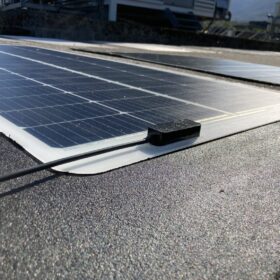
French startup raises funds to build 100 MW factory for ultralight solar modules
Heliup has raised €10 million ($10.5 million) to finance the construction of a PV panel manufacturing facility at an unspecified location in France.
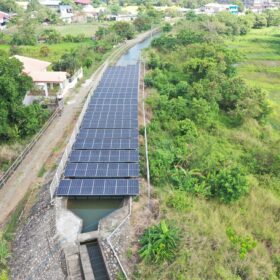
Philippines’ first canal-top solar irrigation projects go online
Philippine government’s National Irrigation Administration revealed that two canal-top solar arrays for irrigation purposes were recently commissioned. It also said that 147 solar-powered irrigation projects in the country will be delivered by the end of the year, with 183 in the pipeline for 2024.
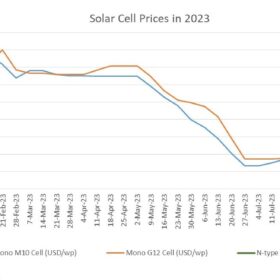
Solar cell prices are expected to hit fresh record lows following China’s Golden Week
In a new weekly update for pv magazine, OPIS, a Dow Jones company, provides a quick look at the main price trends in the global PV industry.
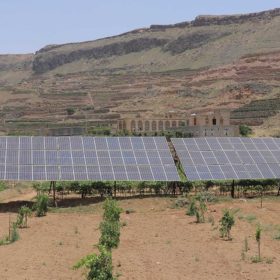
Yemen kicks off solar tender
The Yemeni government and the UN Development Programme (UNDP) are now accepting proposals from developers for four solar projects, ranging from street lighting to a 300 kW array.
A survival guide for solar SMEs
As solar manufacturing moves toward technological convergence, and rampant production capacity expansion continues, standing out from the crowd is just one of the strategies small- and medium-sized enterprises (SMEs) will have to use to survive, according to InfoLink’s Amy Fang.
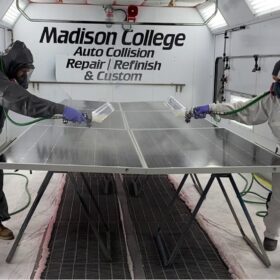
Novel thin-film anti-soiling coating increases solar module yield by over 3%
A group of scientists in the United States saw ‘encouraging’ results after testing the commercialization of novel coating materials in field tests, with the coating only increasing a panel’s total cost by 1.4%.
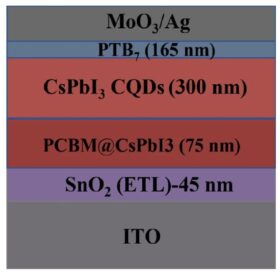
Perovskite quantum dot solar cells on the path to achieve 30% efficiency
Researchers in Iran have identified new ways to design perovskite quantum dot solar cells via a series of simulations. They investigated, in particular, how the perovskite absorbers can be gauged in order to enhance their electro-optical properties.

European warehouses now storing more than 80 GW of unsold solar panels
New figures provided to pv magazine by Rystad Energy reveal that the amount of unsold panels in European warehouses may have more then doubled between mid-July and the end of August, and that it may reach 100 GW by the end of the year. Analyst Marius Mordal Bakke explained that PERC modules bought and stored by a European distributor for $0.23/W in March are now facing an average spot price of $0.16/W today, which could very likely be $0.15/W next month.

Mauritius seeks consultants for 30 MW floating solar plant
The Mauritian government’s Central Electricity Board (CEB) is inviting consultancy firms to pitch their bids on conducting a feasibility study into developing a 30 MW floating solar PV farm at Tamarind Falls Reservoir in the archipelago’s southwest.
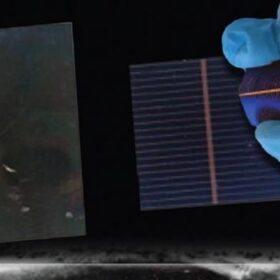
Researchers build 20-μm-thin monocrystalline solar cell with 21.1% efficiency
The scientists built the device by depositing multiple metal nanofilms on both sides using plasma-enhanced chemical vapor deposition. The cell achieved an open-circuit voltage of 684 mV, a short-circuit current density of 38.2 mA/cm2 and a fill factor of 80.8%.
