
REC rolls out new 470 W rooftop solar panels
Singapore-based PV module manufacturer REC Group has launched in Australia a new series of rooftop solar panels with power ratings ranging from 450 W to 470 W and efficiencies of up to 22.6%.
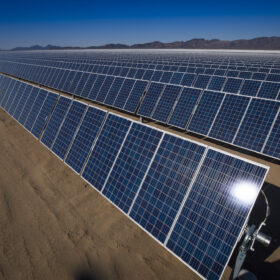
Will New Delhi hear the call from solar developers?
Falling solar equipment prices, bulk module orders, and an expansion in domestic solar manufacturing capacity are driving a solar boom in India. The government can add further impetus if it tweaks domestic content rules.
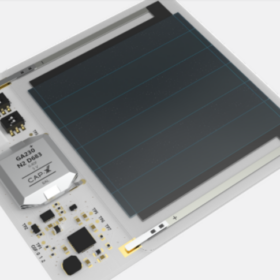
Epishine unveils organic PV kit for indoor battery-free applications
Sweden-based Epishine has launched a developer kit based on its 6-cell 50 mm x 50 mm organic PV module for prototyping and testing its use in battery-free indoor sensing and monitoring devices.
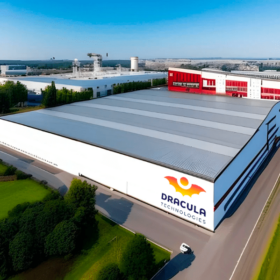
Dracula Technologies builds organic PV module factory in France
Dracula Technologies has built an organic photovoltaic (OPV) module factory in France to make OPV devices with digital printing technology for connected objects. The facility can produce up to 150 million cm² of OPV modules per year, with the first shipments scheduled to start in 2024.
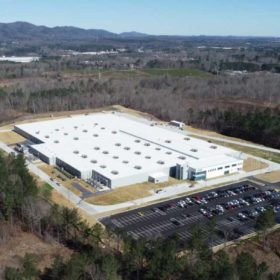
Qcells expands $2.5 billion US solar factory
Qcells has expanded its $2.5 billion solar factory in the US state of Georgia. The move is the first phase of its factory expansion plans, increasing module production capacity to more than 5.1 GW.

Axitec to set up 600 MW of pilot solar module lines in India
Axitec Energy India has announced the establishment of 600 MW of pilot solar module lines in India. CEO Tanmoy Duari told pv magazine that 300 MW of the planned capacity in Gujarat and another 300 MW in Tamil Nadu will produce n-type TOPCon solar modules. Production will start in the first quarter of 2024.
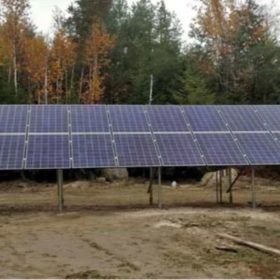
Downward trend for PV module prices losing momentum
If demand picks up again toward the end of the year due to the current price situation, the downward trend for PV module prices could be stopped, according to pvXchange’s Martin Schachinger.
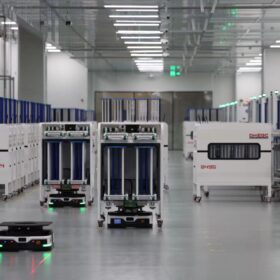
Chinese PV Industry Brief: Haitai, TCL Zhonghuan advance PV factory plans
TCL Zhonghuan has raised funds to build a polysilicon and cell factory, while Haitai Solar has changed the location of its 10 GW TOPCon factory from Yancheng, Jiangsu province, to Chuzhou, Anhui province.
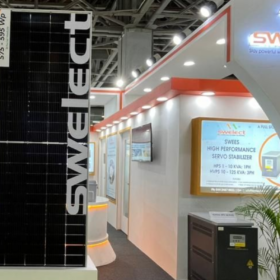
India’s Swelect unveils 595 W mono PERC solar panels
Swelect, an Indian manufacturer, has launched a new line of mono PERC solar panels, with power outputs ranging from 575 W to 595 W and efficiency ratings of up to 21.17%.
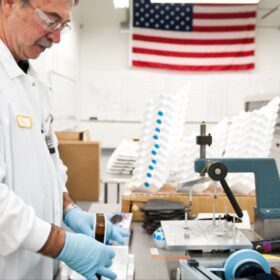
Suniva plans 3.5 GW US solar cell factory
Six years after petitioning the US government for tariffs to make its products more competitive, US.-based Suniva has revealed plans to launch 1 GW of cell manufacturing capacity by spring 2024, followed by an additional 2.5 GW expansion.
