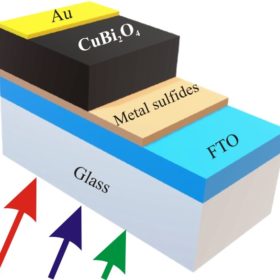
Scientists make first attempt to design solar cells based on kusachiite
Indian scientists have designed a thin-film solar cell that uses a mineral made of binary copper(II) and bismuth(III) oxide. They identified a cell design with a tin sulfide buffer layer that offers efficiencies close to 27.7%.
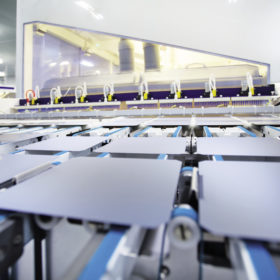
Chinese PV Industry Brief: Polysilicon prices trending downward
Longi has lowered the prices of all wafers, and JA Solar has unveiled plans to build a new 10 GW factory. PV InfoLink, meanwhile, says polysilicon prices are clearly starting to fall.
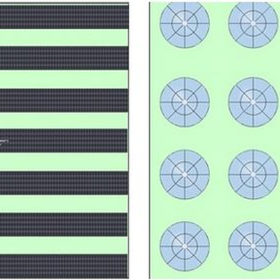
Photovoltaics vs. concentrated solar power
Omani researchers have compared the performance of PV and concentrated solar power (CSP) in terms of energy generation intensity and the effective use of land at low latitudes near the Tropic of Cancer. They described nine project typologies and ranked them with three different simulation tools.

Low-breakdown-voltage TOPCon IBC solar cells to improve shading tolerance
Scientists in the Netherlands have looked at how TOPCon IBC solar cells could help to reduce the impact of shading on solar modules.

Freight costs edge toward 4% of solar module costs, near pre-pandemic levels
Freight costs fell for the 39th straight week to account for roughly 4% of solar module costs – close to pre-pandemic levels. PV consultant Asier Ukar tells pv magazine that this trend will likely continue over the short term.
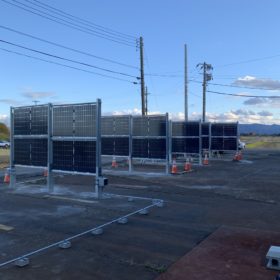
Vertical agrivoltaics for high snow loads
Luxor Solar has developed a south-oriented system for high snow loads in Japan. It features its own heterojunction solar modules, along with mounting systems from Germany’s Next2Sun and inverters from Japan’s Omron.
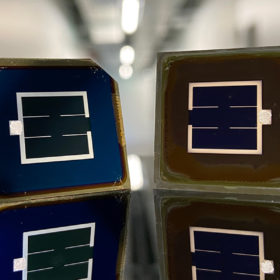
Solar cell efficiencies at a glance – updated
A research group led by Professor Martin Green has published Version 61 of the solar cell efficiency tables. The tables include a world record for a silicon heterojunction cell, announced by Longi earlier this week, as well as five more new results.
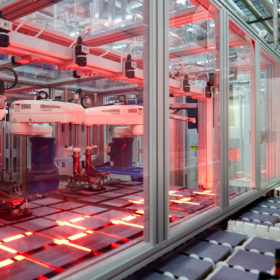
Qcells, European consortium launch production line for tandem silicon-perovskite solar cells
South Korea-based Qcells and a research group led by Helmholtz-Zentrum Berlin (HZB) have established a pilot manufacturing line for silicon-perovskite tandem cells in Thalheim, Germany. The project aims to speed up the technology’s mass manufacturing and market penetration.
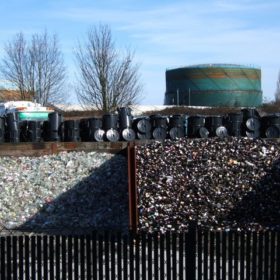
Microwave heating for glass separation in end-of-life solar modules
Scientists in Thailand have used microwaves to separate broken glass from PV panels. The process can be performed at temperatures ranging from 45 C to 55 C.
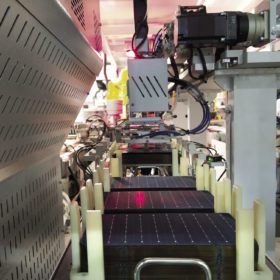
India launches second phase of solar production incentive scheme
Solar Energy Corp. of India (SECI) has started accepting applications from solar manufacturers under the second phase of the production-linked incentive (PLI) scheme, with an outlay of about $2.4 billion.
