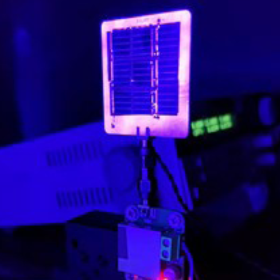
Photovoltaics for underwater wireless communication
Researchers in China used commercially available solar cells to create an underwater optimized lens-free system for high-speed optical detection and have found that the PV devices enable a much larger detection area than commonly used photodiodes.
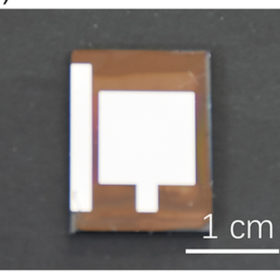
All-polymer solar cell with 15.53% efficiency via meniscus-assisted coating
Scientists in China have developed an organic, all-polymer solar cell with a special meniscus-assisted coating technique. They claim that the power conversion efficiency of the cell is the highest among solution-printing-based, all-polymer solar cells.
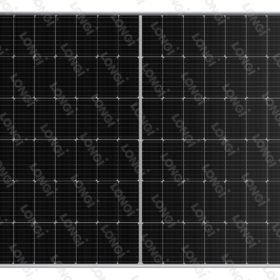
Longi unveils 415W solar panel with 21.25% efficiency
The new product is mainly intended for use in commercial and industrial solar projects. It has a size of less than 2m² and features a short-circuit current below 15A.
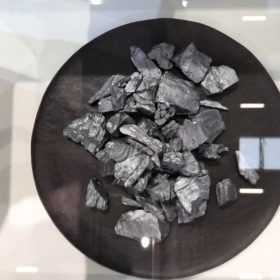
Chinese PV Industry Brief: Hoshine plans 200,000 ton poly fab
Hoshine will invest $2.75 billion in the new polysilicon factory. Elsewhere, Irico New Energy today announced a strategic co-operation agreement with PV manufacturer Jinko Solar that will see it prioritize supply of solar panel glass.
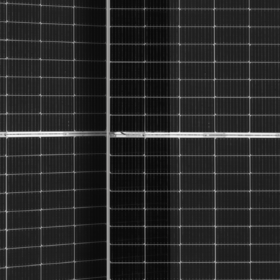
TOPCon vs PERC – a battle between fast learning curves
TOPCon solar modules will gain more market share if their average efficiency, already higher than that of PERC panels, continues to improve, according to Stefan Glunz, PV research chief at Germany’s Fraunhofer Institute for Solar Energy Systems ISE. In an upcoming pv magazine webinar on the potential of TOPCon tech, Glunz will show how to reduce costs and increase efficiency.
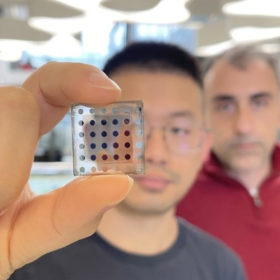
Solar cell based on silver bismuth sulfide nanocrystals achieves 9.17% efficiency
Scientists in Spain have fabricated a silver bismuth sulfide (AgBiS2) material with an absorption coefficient that is claimed to be 5-10 times greater than any other material currently used for PV technology. A cell built with these nanocrystals showed a power conversion efficiency of 9.17%, an open-circuit voltage of 0.495V, a short-circuit current of 26.75mA/cm2, and a fill factor of 63%.
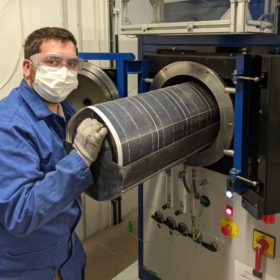
New PV module recycling tech from France
French start-up Rosi Solar has developed an industrial solution claimed to be capable of recovering high purity silicon, silver and copper contained in end-of-life PV modules. The company’s technology is based on a pyrolysis process that makes it possible to isolate the different metals from the cells.
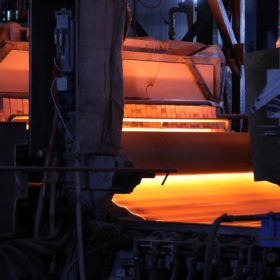
India’s Borosil to expand solar glass production capacity to 2,000 tons per day
The solar panel glass manufacturer expects strong growth in demand for its products at home and abroad with a significant rise expected in the production of PV modules in the USA and Europe.
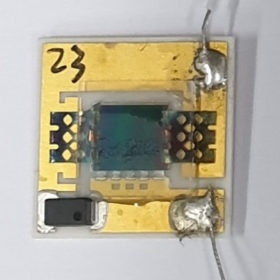
Multi-junction solar cell integrating radiative cooler
The triple-junction solar cell is based on indium gallium phosphide (InGaP), gallium arsenide (GaAs), and Germanium (Ge) and is made with a micro-grating made of glass, consisting of a two-dimensional x-framework structure fixed onto the surface of the solar cell. Its operating temperature was found to be 6 degrees Celsius lower than that of a reference cell without the cooling technique.

Chinese PV Industry Brief: GCL-Poly wants to move to Shanghai Stock Exchange
In other news, Longi raised funds to build another 18 GW of solar cell capacity and Suntech began work on its 10 GW module factory in Anhui Province.
