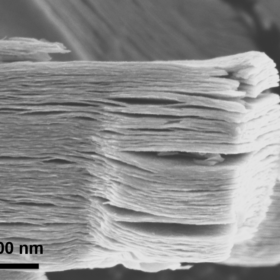
Solar cells based on 2D carbides, nitrides
Researchers from Qatar and South Korea have studied the potential of solar cells based on 2D MXenes materials. They said that titanium carbide MXene (Ti3C2Tx) is the most promising material in the MXene family for PV applications.
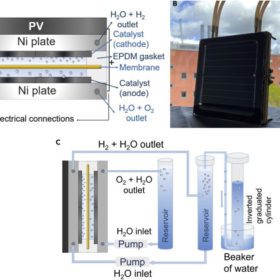
Thermally integrated PV-electrolyzer with 9.1% solar-to-hydrogen efficiency
A Swedish research group has developed a device combining CIGS thin-film solar modules and an alkaline electrolyzer based on a trimetallic cathodic catalyst made of nickel, molybdenum, and vanadium (NiMoV) and an anode made of nickel oxide (NiO). The electrolyzer achieved an average solar-to-hydrogen (STH) efficiency of 8.5% for stable operations during 100 hours.
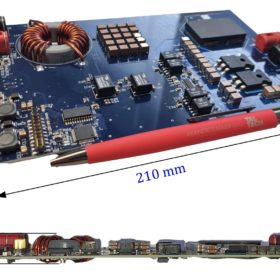
Novel power electronic converter for BIPV
Conceived by researchers in Estonia, the device is claimed to be compatible with both crystalline silicon and thin-film BIPV panels and to manage, easily, different voltage levels. It can be applied either in solar facades or BIPV rooftop arrays.
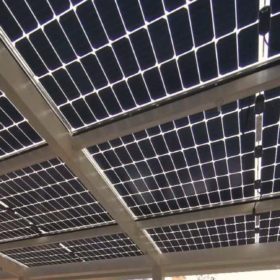
Longi releases Hi-MO 5 snow-load test results
Longi Solar has released the data of an inhomogeneous snow-load test. Its results show that its 72-cell solar modules held 1,800 pascals more force than a competing large format product using 210 mm cells.
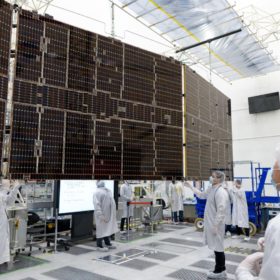
Psyche asteroid mission will be PV-powered, says NASA
NASA has said that it will explore a large, metal-rich asteroid with a remotely operated craft powered by two cross-shaped solar arrays.

India’s solar cell imports rise as domestic module production expands
The nation imported solar cells worth more than $633 million from April to the end of last year, a figure higher than the value imported during the whole of the 2020-21 fiscal year.
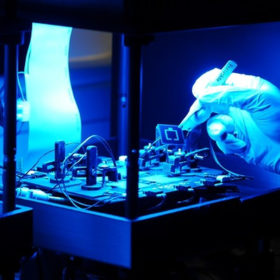
Hanwha Q Cells, Helmholtz-Zentrum Berlin claim 28.7% efficiency for 2T perovskite-silicon tandem solar cell
The Korean manufacturer and the German research center were able to improve the performance of their jointly developed tandem solar cell by almost one percentage point.
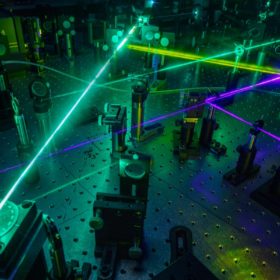
Terahertz, microwave spectroscopy for more accurate PC cell assessments
A German research group has used spectroscopic methods based on terahertz or microwave radiation and has discovered that they might help with more precise assessments of the characteristics and performance of solar cells. Their proposed approach purportedly enables the evaluation of maximum possible efficiency levels for emerging materials such as perovskites in solar cells.
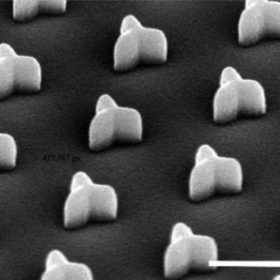
Spectrum splitters to raise efficiency of perovskite-silicon tandem solar cells
Researchers in Canada have conducted a series of simulations to understand how spectrum splitters may raise the efficiency of two-terminal tandem solar cells and have found that efficiency gains may be of up to 6%. The proposed cell configuration was also found to be economically competitive.

Autonomous laser system clears birds from PV arrays
Bird Control Group’s autonomous laser system reduces bird populations in specific areas by more than 70%. In many cases, bird activity has been reduced by more than 99%.
