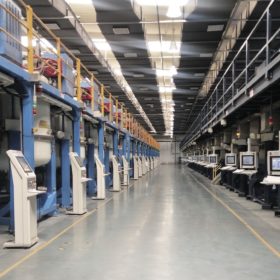
Chinese PV Industry Brief: Solar module prices drop for the first time in the past six months
Furthermore, polysilicon manufacturer Daqo will increase investments in its plans to expand capacity and Canadian Solar closed a strategic co-operation agreement with battery giant CATL.
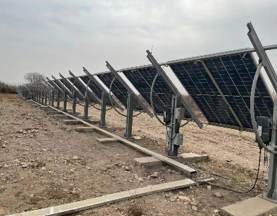
ITRPV: More work needed to process 210mm wafers
In an update to its annual International Technology Roadmap for Photovoltaics, German engineering association VDMA discusses the readiness level for various technologies in PV cell and module manufacturing, finding that more process development is needed for 210mm wafers – the largest format currently on the market – to match the throughputs that will soon be achievable with smaller formats including 182mm.

US International Trade Commission says that Section 201 tariffs should be extended
The issue now moves to President Joe Biden who will decide whether or not to extend the tariffs beyond their February 2022 expiration.

Hunting the sun with Harris hawks optimization algorithm
An Iranian-Canadian-based research group has conceived a nature-inspired algorithm to estimate the model parameters of PV systems. The proposed tool mimics the exploring, exploiting and attacking strategy of the Harris hawk, a bird of prey species that cooperates when hunting.
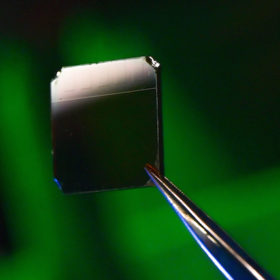
Ultra-thin 2D perovskite solar cell with 18.3% efficiency
The solar cell was built with a layer of organic cations between the iodide on top, and lead on the bottom enhanced interactions between the layers. Its creators designed the device after they discovered that, when the sunlight hits a 2D perovskite, it contracts the space between atomic layers in the material.
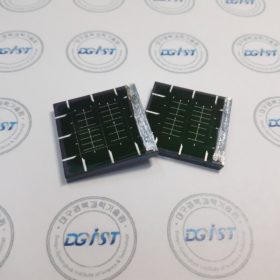
Korean research institute claims 12.2% efficiency world record for flexible CTZS solar cell
Korean manufacturer SolarFlex Ltd will now seek to bring the solar cell to commercial production.
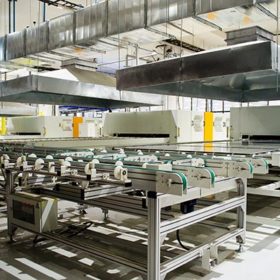
Tata Power to set up 4 GW vertically integrated solar factory in India
The Indian company is planning to invest INR 3,000 crore ($403 million) in the new manufacturing facility.
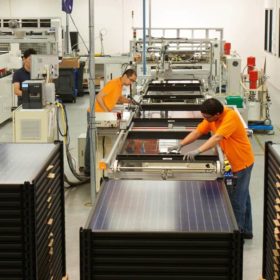
Australian solar manufacturers respond to country-wide stock shortfalls
As Australia, like much of the world, battles with shortfalls in supply as solar module prices rise and Chinese companies’ stocks decrease, the country’s only manufacturer, Tindo Solar, has opted to release emergency stocks. Likewise, Chinese giant Longi is working to guarantee supply for Australia, saying its vertical integration has afforded it extra security.
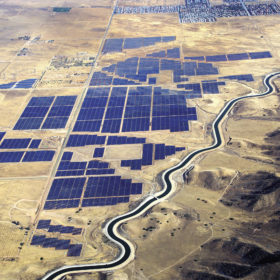
Chinese PV Industry Brief: China National Petroleum Company builds 200 MW solar park
Elsewhere, Longi has announced it has secured a wafer supply deal from Zhejiang-based TOPCon module manufacturer Dal Solar, and glassmaker Irico New Energy is planning an initial public offering.
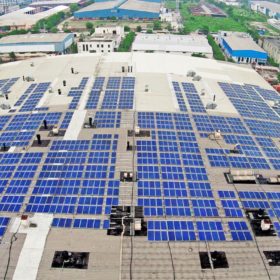
Indian developer Azure Power secures sale of electricity from 600 MW of solar projects
The company has landed the signature of state-owned body the Solar Energy Corporation of India, which awarded Azure 4 GW of solar farms in return for the developer committing to set up 500 MW worth of cell and module production lines.
