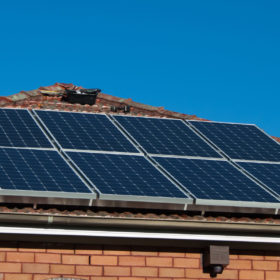
PV system design for low-cost hot water production
Developed by Spanish scientists, the proposed system design is said to be able to achieve water temperatures above 70 degrees Celsius and to cover around 85% of the annual sanitary hot water consumption of a household with six people.
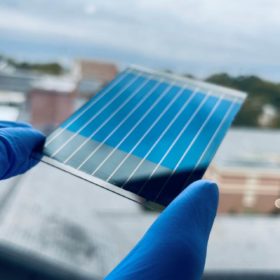
Lead-absorbing encapsulation for 18.5%-efficient mini perovskite solar module
The solar module has an area of 31.5cm2 and is relying on perovskite cells with an efficiency of 22.9%. It was encapsulated with a special ionogel that is claimed to enhance the module’s impact resistivity and stability, as well as to reduce the possibility of lead leakage.

Another Chinese module maker may face WRO enforcement in the U.S., Roth Capital warns
Given the Withhold Release Order (WRO) and the potential anti-circumvention tariff challenges, U.S. module supply risk is material, the analyst firm said in a note to clients.
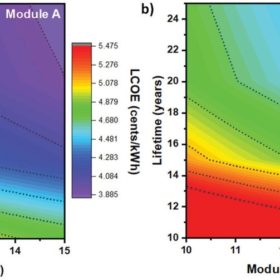
Analyzing the opportunity for perovskite solar module production in India
Scientists in India conducted a techno-economic analysis for a 100 MW production line for carbon-electrode perovskite solar modules, located in Himachal Pradesh, India. The analysis concludes that, even at the smaller scale, this emerging technology could achieve cost levels comparable with today’s silicon solar products.
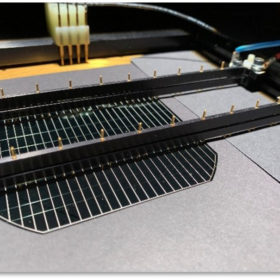
Scaling up perovskite-silicon tandem solar cell performance
Scientists in Germany investigated various routes to optimizing cell design for perovskite-silicon tandem products. Beyond the perovskite layer itself, they note several other areas that should be optimized for tandem cells, taking silicon heterojunction processing as a starting point. The research identifies several routes to cut costs in cell production, including a significant reduction in indium consumption.
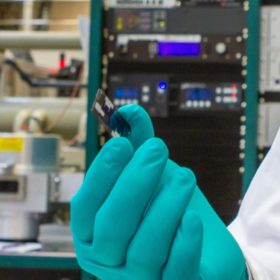
Solliance hits 29.2% efficiency on perovskite/silicon tandem solar cell
The Solliance consortium has built a solar cell in a four-terminal tandem configuration that combines a 17.8%-efficient highly near-infrared transparent perovskite cell with a prototype of an 11.4%-efficient c-Si interdigitated back contact silicon heterojunction cell developed by Panasonic.
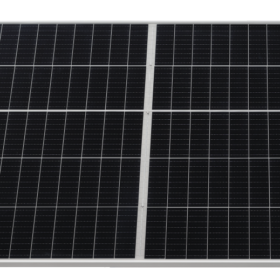
Chinese PV Industry: Government announces deployment of 30 GW of renewables in northwestern China
Furthermore, TBEA has announced a plan to invest in four solar power plants and Flat Glass has agreed to acquire two quartz mines.

High module prices make Italy an early victim of supply chain disruption
Sergio Matalucci reports for pv magazine from the Key Energy event in Rimini on how the Italian solar market is currently dealing with the module price hike and the supply change disruption. According to the president of Italian association Italia Solare, difficulties to source modules in the market have intensified over the last four months.
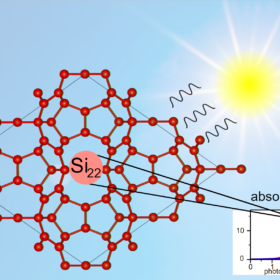
A whole new structure for silicon
Scientists in the United States theorized that a new allotrope of silicon – the same element arranged into a different atomic structure – could show greatly improved photovoltaic performance compared to that used in today’s solar cells. The allotrope, Si22, could also have important properties for use in quantum computing, carbon sequestration and other applications – though fabrication and actual physical testing of the material will be needed to back up the theoretical findings presented so far.
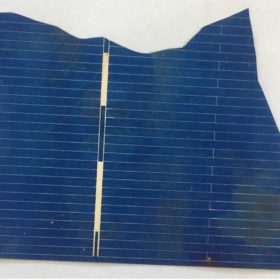
New tech to recover pure silicon from end-of-life solar cells
An Indian research group has used three different chemicals instead of commonly used hydrofluoric acid to separate silicon from the cell. The technique is claimed to be able to deliver recycled silicon with a purity of up to 99.9984%.
