
Using excess heat from PV modules for lithium-extraction process
Canada-based Enertopia filed provisional patents for technology that it said could boost PV system output by 10% or more and reduce panel heat stress.

Applications open for Indian solar manufacturing incentive scheme
Companies can apply for incentives to set up gigawatt-scale solar factories in India. Applications can be submitted until June 30 and the list of successful recipients will be announced on July 26, with letters of award to be issued four days later.
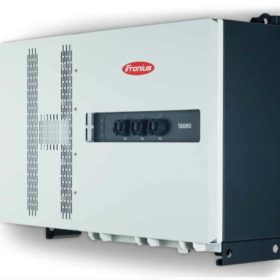
Fronius launches new inverter for large-scale PV plants
The 50 kW version of the new inverter features an efficiency of 98.6% and a European efficiency of 98.1%. It can be deployed with a decentralized approach, next to the PV modules, or centralized, at the grid connection point.
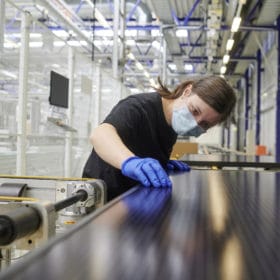
Meyer Burger begins manufacturing activities at 400 MW module factory in Germany
The Swiss manufacturer opened its module factory in Freiberg a few days after having begun manufacturing activities at its 400 MW cell factory in Thalheim.
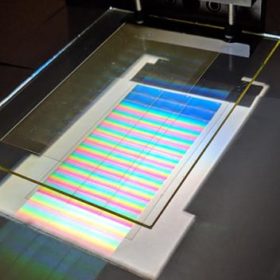
Holographic light collector to improve solar panel yield
In the proposed system, the optical element is placed symmetrically at the center of the solar panel in order to increase the length of the effective light collection region. Each hologram is claimed to be able to separate the colors of sunlight and direct them to the solar cells within the panel.
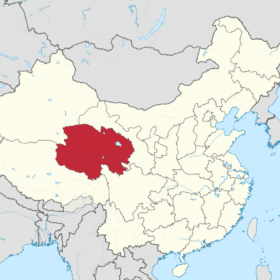
Chinese PV Industry Brief: Earthquake disrupts wafer production in Yunnan and Qinghai
Solar manufacturers Longi and Zhonghuan Semiconductor have reported output at their factories in the two provinces has been reduced by earthquakes that happened on Friday night and before dawn on Saturday. Elsewhere, module maker Jolywood has announced the signing of an agreement with the city government of Taiyuan, in Shanxi province, to build a TOPCon solar cell fab with a 16 GW production capacity.

Hanwha Q Cells unveils 495 W solar panel with 21.4% efficiency
The Q.Peak Duo XL-G10.3 panel is currently the largest and most powerful product manufactured by the South Korean module maker. It is based on 156 monocrystalline ‘Q.antum’ half cells and is the company’s first panel relying on M6 wafers.

CEA-Ines achieves 19.2% efficiency for flexible perovskite solar cell
The cell was fabricated with a flexible substrate made of indium tin oxide (ITO) and polyethylene terephthalate (PET). The device was tested through a damp heat test and showed it can retain around 90% of its initial efficiency after 800 hours.
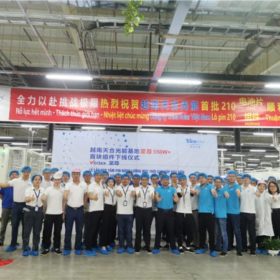
Trina Solar begins production of 550 W modules at Vietnam facility
Trina Solar broke ground on its Thai Nguyen plant in December, and completed construction in five months.

Global solar supply chain under scrutiny
The discussion about the extent to which forced labor exists in the solar value chain continues. A video, a university report, a ministerial response and a parliamentary machinations formed notable developments of the debate last week.
