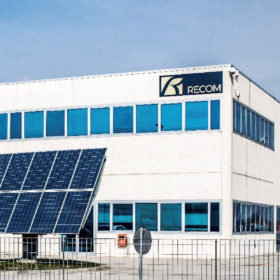
Recom to increase production capacity by 1 GW
The German module manufacturer is planning a further expansion of capacity in Europe. In France and Armenia, new production lines for solar cells and modules are planned to start this year.

Study: 32% tandem cell solar still competitive at triple the price
Arizona State University researchers have determined that a 32% efficient perovskite-silicon tandem cell could produce electricity at the same price as cutting-edge 22% efficient panels in the most cost-competitive of situations
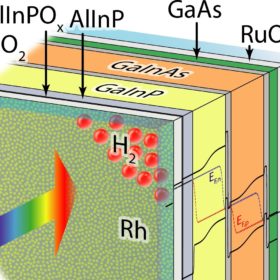
New solar water-splitting cell demonstrates 19.3% efficiency, increasing longevity significantly
The cell uses a novel approach that increases its conversion efficiency and longevity at the same time. Researchers claim it is a new world record for this type of application and highlight its importance in storing renewable energy in hydrogen to compensate for output and demand fluctuations.
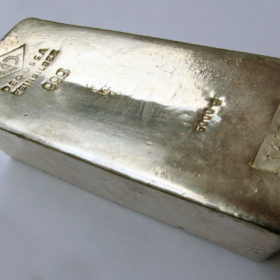
Amount of silver needed in solar cells to be more than halved by 2028, Silver Institute says
The US-based industry association finds the amount of silver loading may fall from 130 mg per cell in 2016 to approximately 65 mg by 2028. Alternative and cheaper raw materials, such as copper and aluminum, are not expected to replace silver in commercial cell production, at least in the next decade.
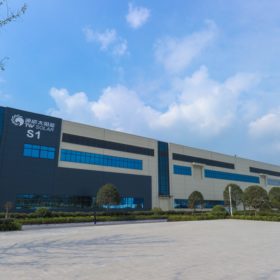
Ambitious PV expansion plans for China’s Tongwei, Longi and Sunport still on track
Many expansion plans are still firmly afoot in the Chinese solar PV manufacturing industry, if the information pv magazine gathered from some of the country’s leading manufacturers at last week’s Smarter E event, is anything to go by. Indeed, Tongwei , Longi, Sunport and BYD are all progressing at full speed with their capacity ramp ups.
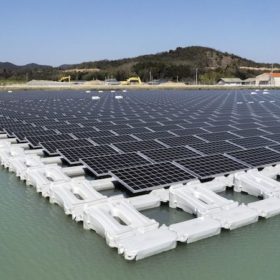
Kyocera reports lower solar sales for fiscal 2018
The group’s solar business incurred an operating lost in the last fiscal year, due to a write-down related to a long-term purchase contract for the supply of polysilicon.

German scientists use germanium to improve performance of kesterite solar cells
Although current efficiencies for solar cells based on kesterite do not exceed 12.6%, the use of germanium may enable the development of cells with a higher energy band gap.
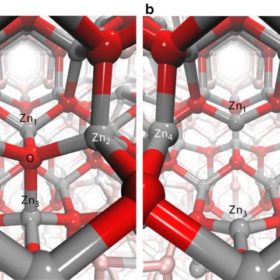
US researchers mull zinc oxide as solar cell manufacturing alternative to titanium dioxide
The group of scientists has identified a new process by which holes get trapped in nanoparticles made of zinc oxide.
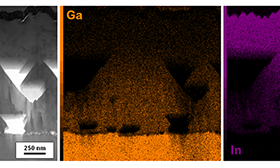
Luxembourg scientists provide new insight on how sodium can be used in thin film solar cell manufacturing
The research team found that sodium, contrary to common belief, does not decrease per se indium and gallium interdiffusion, but instead hinders intergrain diffusion by segregating at grain boundaries.
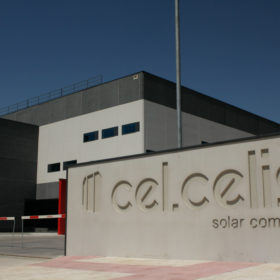
Spain to again host solar cell manufacturing
The production unit of Spain’s five-year idled solar cell maker, Cel Celis has been acquired by Bashmor Engineering. The new investor plans to restart manufacturing activities at the factory in Bembimbre, and to double capacity to 70 MW within a year.
