
How to reduce ionic losses in tin-based perovskite solar cells
Researchers in Germany have developed a DMSO-free fabrication process for tin-based perovskite solar cells that dramatically reduces ion density – over tenfold lower than in lead-based devices – leading to improved stability.

The thermomechanical impact of plated copper contacts on heterojunction solar cells
UNSW researchers have found that annealing copper-plated contacts in heterojunction solar cells creates only localized stress. Their analysis also showed that, at typical annealing temperatures around 200 C, the probability of silicon fracture is very low.

Solar powers the warfighter
2026 Defense authorizations highlight the need for U.S.-made photovoltaics in satellites to compete with foreign adversaries, writes Rob Gardner, vice president, congressional and regulatory affairs, for the SEMA Coalition.
Solar Stewardship Initiative publishes guide for solar supply chain
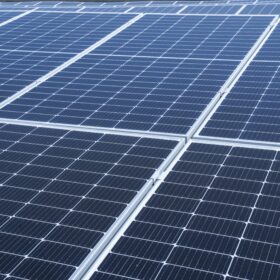
The Solar Stewardship Initiative’s (SSI) new buyers guide targets forced labor risk, supply-chain transparency, and compliance readiness in global solar procurement.

Perovskite-silicon tandem solar cell with steric complementary design achieves 32.3% efficiency
Researchers in China developed a monolithic perovskite-silicon tandem solar cell using a steric-complementary interface design, achieving a certified efficiency of 32.12% and enhanced long-term stability. This strategy optimizes molecular fit in the perovskite lattice, improving both charge transport and device longevity.
TNO offers mass customization line for integrated PV applications
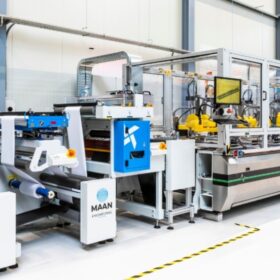
The Dutch research institute’s highly automated research line offers customized, flexible solar semi-finished PV products to partners developing integrated PV applications.
How the world’s sunniest region tackles solar module soiling, cleaning
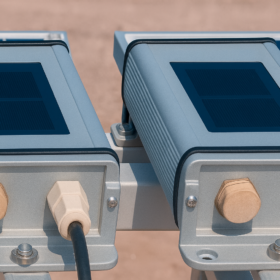
Researchers studying PV panels in Chile’s hyper-arid Atacama Desert found that cemented soiling can cause annual energy losses of up to 9.8%. Their combined field and laboratory work shows that dry cleaning leaves residue that accelerates future cementation, making wet cleaning the more effective long-term strategy despite higher costs and scarce water.
Perovskite solar testing field commissioned in Japan
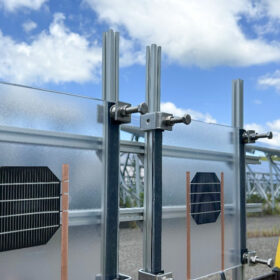
Kanazawa University has begun long-term outdoor testing of tandem perovskite solar cells in collaboration with Toshiba. The research project aligns with Japan’s broader push to scale perovskite PV technologies toward large deployment by 2040.
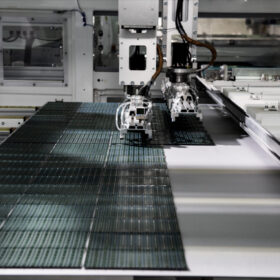
Chinese PV Industry Brief: Aiko, Skyworth PV plan 5 GW back-contact solar module factory in Guangxi
The two companies will invest approximately CNY 2 billion ($282.8 million) in the new facility, which will host two production lines, each with a capacity of 2.5 GW. The project has already passed environmental review.
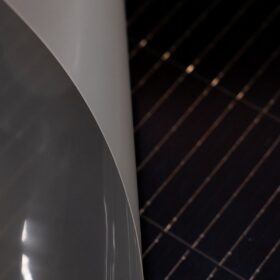
Endurans Solar launches transparent backsheet for utility-scale bifacial modules
The U.S. based manufacturer has completed certification of its latest adhesive-free, fluorine-free backsheet.
