
Sri Lanka launches 70 MW ground-mounted solar auction
Sri Lanka’s government-owned Ceylon Electricity Board (CEB) is inviting applications for the development of 1 MW to 5 MW ground-mounted solar projects – totaling 70 MW – with 20-year power purchase agreements (PPA).
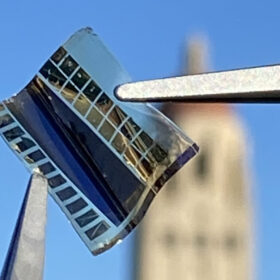
New dichalcogenide solar cell architecture promises 25% efficiency
Stanford University researchers have explored the efficiency of a single-junction solar cell using transition metal dichalcogenides such as MoS2, MoSe2, WS2, and WSe2 as absorbers. The device has shown substantial light absorptance in ultra-thin 5-nanometer (nm) films, achieving high short-circuit current levels.
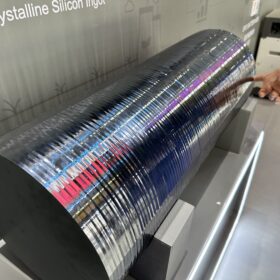
Chinese PV Industry Brief: Industry group reports lower polysilicon prices
Polysilicon prices fell by as much as 2.10% in China this week, according to the China Nonferrous Metals Industry Association (CNMIA).
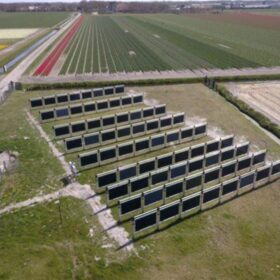
Researchers shed light on mysterious, higher energy yields in vertical PV systems
Scientists in the Netherlands have sought to understand the reason for unexpected gains in vertical PV systems and found that these installations have a much higher heat transfer coefficient than their horizontally deployed counterparts.
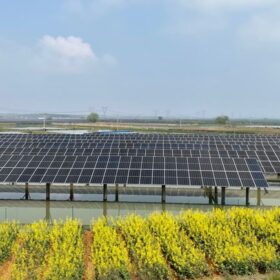
South East Asia sees renewed interest in utility scale floating solar
Indonesian president Joko Widodo inaugurated a 145 MW floating solar plant in Java this week, while module manufacturer Husaun Energy said it will supply 60 MW of heterojunction solar panels for Grow Energy’s Thailand floating PV projects.
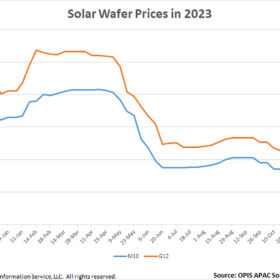
Solar wafer prices could bottom out soon with new record lows
In a new weekly update for pv magazine, OPIS, a Dow Jones company, provides a quick look at the main price trends in the global PV industry.
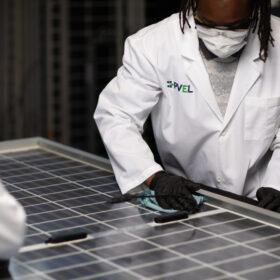
PVEL upgrades solar module qualification testing
PV Evolution Labs (PVEL) says it has added new solar module qualification tests and fresh insights to improve intelligent module procurement strategies.

Perovskite-silicon tandem cell achieves 28.9% efficiency via high bandgap top perovskite cell
A group of international researchers has developed a new perovskite-silicon solar cell design using a top perovskite PV device with an energy bandgap of 1.67 eV and a new self-assembly monolayer based on carbazole. The tandem cell achieved a higher efficiency compared to counterparts without the monolayer and passed the IEC 61215 standard thermal cycling test.

Heraeus buys stake in French solar manufacturer HoloSolis
HoloSolis plans to build Europe’s largest PV factory – a 5 GW solar plant in France – by 2025. Heraeus will provide its latest metallization technologies for the factory and play an active role on the HoloSolis board of directors.
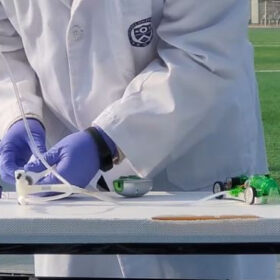
Algae photovoltaics for hydrogen production
South Korea researchers have developed a cell by merging green algae with carbon nanofibers, in order to generate 9.5 W per cell and achieve a peak efficiency of 0.9%. They claim this is enough to power a micro-generation system for hydrogen production.
