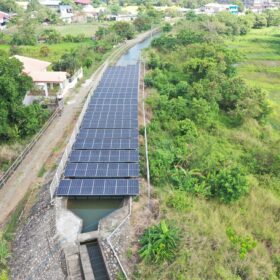
Philippines’ first canal-top solar irrigation projects go online
Philippine government’s National Irrigation Administration revealed that two canal-top solar arrays for irrigation purposes were recently commissioned. It also said that 147 solar-powered irrigation projects in the country will be delivered by the end of the year, with 183 in the pipeline for 2024.
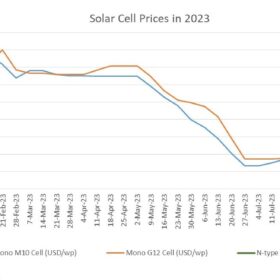
Solar cell prices are expected to hit fresh record lows following China’s Golden Week
In a new weekly update for pv magazine, OPIS, a Dow Jones company, provides a quick look at the main price trends in the global PV industry.
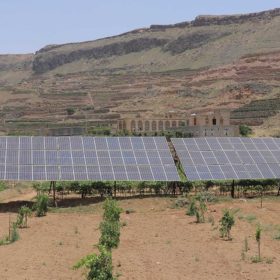
Yemen kicks off solar tender
The Yemeni government and the UN Development Programme (UNDP) are now accepting proposals from developers for four solar projects, ranging from street lighting to a 300 kW array.
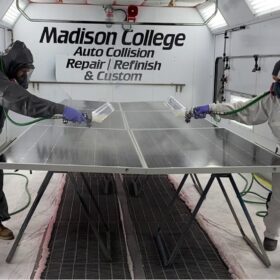
Novel thin-film anti-soiling coating increases solar module yield by over 3%
A group of scientists in the United States saw ‘encouraging’ results after testing the commercialization of novel coating materials in field tests, with the coating only increasing a panel’s total cost by 1.4%.
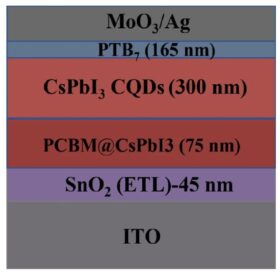
Perovskite quantum dot solar cells on the path to achieve 30% efficiency
Researchers in Iran have identified new ways to design perovskite quantum dot solar cells via a series of simulations. They investigated, in particular, how the perovskite absorbers can be gauged in order to enhance their electro-optical properties.

Mauritius seeks consultants for 30 MW floating solar plant
The Mauritian government’s Central Electricity Board (CEB) is inviting consultancy firms to pitch their bids on conducting a feasibility study into developing a 30 MW floating solar PV farm at Tamarind Falls Reservoir in the archipelago’s southwest.

Sri Lanka launches 25 MW solar tender
Sri Lanka’s Ministry of Power and Energy is now welcoming expressions of interest for the development of ground-mounted or floating solar PV projects – ranging from 1 MW to 5 MW – at three substations in the country. Selected developers will secure a 20-year power purchase agreement.
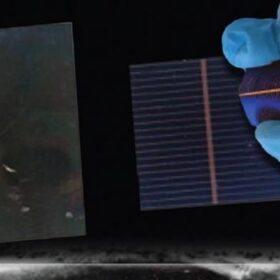
Researchers build 20-μm-thin monocrystalline solar cell with 21.1% efficiency
The scientists built the device by depositing multiple metal nanofilms on both sides using plasma-enhanced chemical vapor deposition. The cell achieved an open-circuit voltage of 684 mV, a short-circuit current density of 38.2 mA/cm2 and a fill factor of 80.8%.
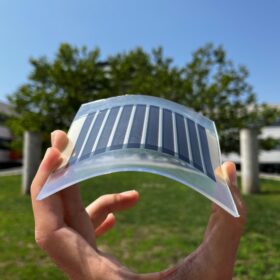
European research group creates injection molding plastic solar cells
A French-Spanish research team developed organic photovoltaic modules embedded into plastic parts through high throughput injection molding. The researchers injected thermoplastic polyurethane in the modules and found it enhances their mechanical stability while keeping a high flexibility.

Swedish startup to use green hydrogen plasma in pilot reactor for solar grade silicon
Encouraged by lab results and a feasibility study, Swedish startup, Green14, in collaboration with Sweden’s Royal Institute of Technology (KTH) plans to build a pilot-scale reactor to make solar grade silicon with a hydrogen plasma process. The company sees the pilot as a step towards using a more sustainable method to produce solar grade silicon for the PV industry at its own gigawatt-scale plant.
