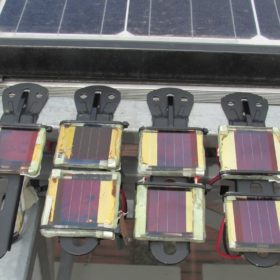
Measuring outdoor performance in perovskites
Scientists in Spain and Colombia took a closer look at the degradation mechanisms affecting perovskite solar cells, and developed a new, high throughput method to characterize their performance in an outdoor setting. The group evaluated the method through outdoor testing on perovskite modules manufactured in a lab. it expects its findings to offer easier device characterization and better understanding of the degradation mechanisms affecting perovskite solar cells, both important factors in the technology’s development.
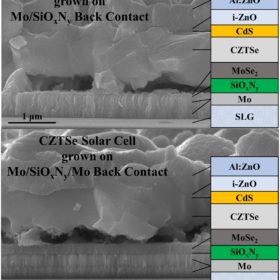
New manufacturing method for kesterite solar cells
German scientists have designed a manufacturing process to reduce the thickness of the molybdenum diselenide interface layer in kesterite solar cells. They used two different configurations of silicon-oxynitride diffusion-barrier layers.
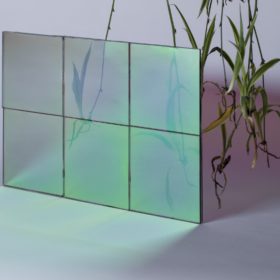
Germanium-based solar cell tech for agrivoltaics
German scientists have fabricated an enhanced amorphous germanium PV cell that confines light in an ultra-thin absorber. It has the potential to combine PV with photosynthesis in new solar applications on bio-reactors, greenhouses, and agricultural land.
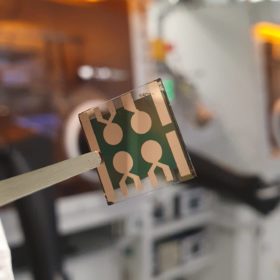
Inverted perovskite solar cell with 21.1% efficiency and high moisture resistance
Australian scientists have built a perovskite solar cell based on 2D and 3D salts. By adding a fluorinated lead salt in the processing solution – normally used to form 3D methylammonium lead iodide – they were able to achieve a 21.1% efficiency, an open-circuit voltage of 1.12 V, a short-circuit current of 22.4 mA/cm2, and a fill factor of 84%.
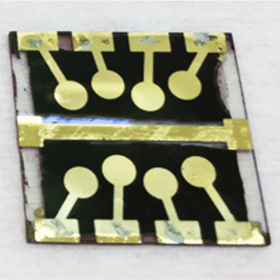
Water-splitting tech to reduce moisture in perovskite solar cells
Italian researchers have engineered a hole extraction layer with water-splitting additives to reduce the impact of moisture in perovskite PV devices. They claim that the method ensured a power conversion efficiency of more than 9% in perovskite cells stored for a month in a water-saturated atmosphere.

Chinese PV Industry Brief: Huge orders for Trina Solar and JYT Corporation
Trina Solar has secured a 4 GW solar module order from US company Nextera Energy and wafer manufacturer JYT Corporation closed deals to supply a total of 1,906,000,000 wafers.
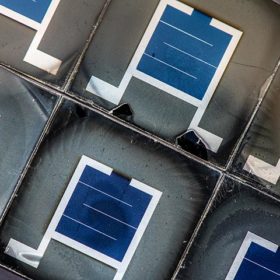
The state of the art in perovskite tandems
A new paper from scientists in China and Canada examines the recent progress in the development of perovskite-silicon tandem cells, finding a technology that’s poised for rapid commercialization, with a few research challenges still to overcome. These are primarily related to ensuring the perovskite layer can match the lifetime of the silicon cell underneath.
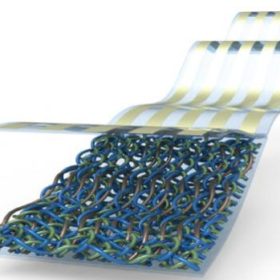
Herbicide may improve organic cell efficiency by up to 1.6%
Researchers in Saudi Arabia claim to have increased the efficiency of organic PV devices with diquat, a compound used in herbicide. The molecular diquat dopant increased optical absorption and the lifetime of electrical charges when light was absorbed.
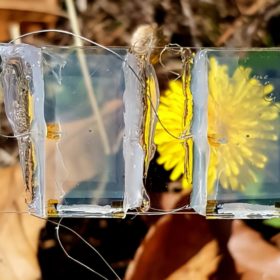
New solar window tech with 2.1% efficiency
Researchers in South Korea have fabricated a fully transparent solar cell which they claim has a transmittance for visible light of more than 57%. The integrated device generates enough power to move a small-sized motor.

JinkoSolar claims 24.9% efficiency for n-type monocrystalline cell
The result was confirmed by Germany’s Institute for Solar Energy Research (ISFH).
