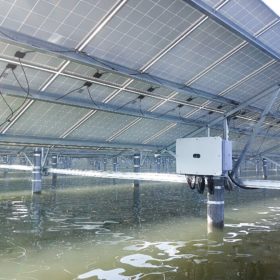
Chinese PV Industry Brief: CEEC launches 15 GW inverter procurement plan
Inverter manufacturers such as Sungrow, Huawei, Sineng, Growatt, Kstar, and TBEA are all participating in CEEC’s procurement scheme, which aims to source around 15 GW of products.
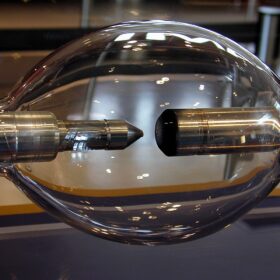
New deterioration diagnosis tech for individual modules in PV panel strings
Conceived by scientists in Japan, the system consists of a a xenon flash lighting system and a detector capacitor. It can reportedly examine solar modules and find the degraded ones without disconnecting the string’s electrical wiring.
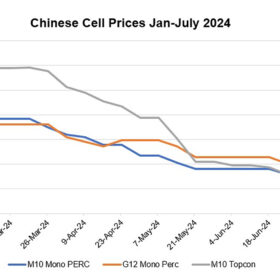
Chinese solar cell prices fall amid oversupply
In a new weekly update for pv magazine, OPIS, a Dow Jones company, provides a quick look at the main price trends in the global PV industry.
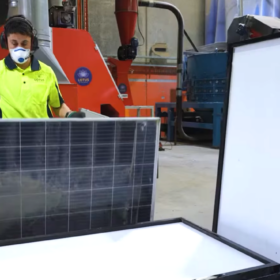
Australian solar panel recycler partners with Canadian silicon anode developer
Australia-based solar panel recycling company Lotus Energy has signed an agreement with Canadian silicon anode developer Neo Battery Materials with aims to supply future North American electric vehicle and energy storage needs.

Bill aims to cut 45X tax credits for Chinese solar makers in the U.S.
While the lucrative tax credits has attracted clean energy manufacturers from around the world to build factories in the U.S., the fact that many of the new manufacturing facilities are from Chinese companies has created a controversy that this new bill aims to solve.
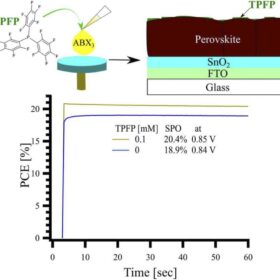
Thin-film perovksite solar cell based on fluorinated phosphoric acid achieves 20.5% efficiency
Japanese scientists built a thin-film perovskite solar cell incorporating fluorinated phosphoric acid (TPFP) into the absorber’s precursor solution. The device achieved remarkable power conversion efficiency due to effective passivation at the interface between the perovskite film and the hole transport layer.

ClearVue integrated solar window tech cracks Middle East construction market
Smart building materials company ClearVue Technologies has cracked the Middle East and Indian construction markets after signing a five-year agreement with Qatar’s largest glass and façade manufacturer.
Chinese PV Industry Brief: Akcome provides update on restructuring process
The Chinese cell maker said its unit Zhejiang Akcome Photovoltaic Technology has received the green light for restructuring. However, if the reorganization is unsuccessful, the company will proceed to bankruptcy liquidation.

Self-cleaning perovskite solar cell based on leek leaves-like film achieves 14.2% efficiency
Scientists in Finland have built a perovskite solar cell with a bio-inspired coating that reportedly improves light transmittance while providing self-cleaning properties. The film was able to improve the device efficiency by up to 6%.

Solar cell based on 2D Dion-Jacobson perovskite achieves 19.11% efficiency
Chinese researchers claim to have developed an “ultrastable” perovskite solar cell based on a two-dimensional, Dion-Jacobson phase perovskite. The device was constructed with blade coating technology and is scalable, according to its creators.
