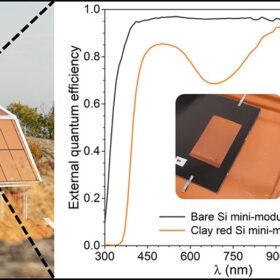
Danish researchers develop color-tunable BIPV foil
The use of a novel roll-to-roll process and optimization technology resulted in polymer foils for use in colored PV modules in a potentially wide range of colors with low iridescence and low levels of efficiency loss.

China to abolish solar export tax rebates in April
China will scrap value-added tax export rebates for PV products from April 1, 2026, while cutting battery rebates ahead of a full phaseout, raising export costs for manufacturers and potentially pulling shipments forward into early 2026.
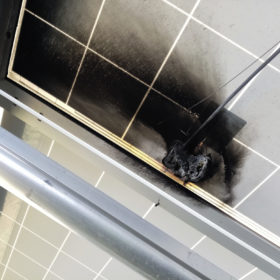
How to avoid ‘long tail’ effects in large-scale PV plants
New UNSW research found that about 20% of solar modules in large PV plants degrade much faster than expected. They recommend holistic strategies such as robust materials, advanced designs, and proactive monitoring to decouple degradation pathways and prevent cascading failures.
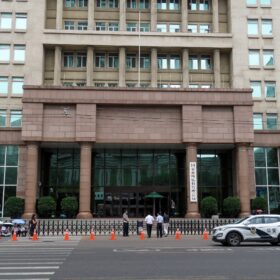
China’s competition regulator halts $7 billion plan to consolidate polysilicon industry
China’s antitrust regulator has halted an industry-led effort to reduce polysilicon capacity and coordinate pricing, ordering full rectification of actions that contributed to rising market prices. Futures fell sharply after the intervention.
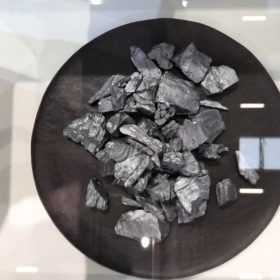
Chinese PV Industry Brief: Polysilicon prices jump over 9% as China supply tightens
Polysilicon prices in China rose sharply this week as reduced output, higher costs, and strong downstream demand pushed transactions above CNY 60,000 ($8,590) per metric ton (MT). Module prices, however, remained stable, supported by firm procurement and tight wafer supply.
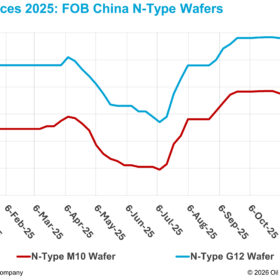
N-type wafer prices rise over 10% as silver-driven cell costs increase
In a new weekly update for pv magazine, OPIS, a Dow Jones company, provides a quick look at the main price trends in the global PV industry.
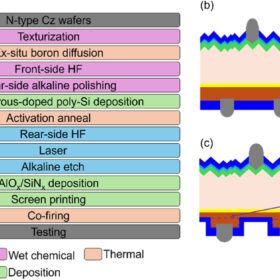
Localized polysilicon thinning improves TOPCon solar cell performance
UNSW researchers boosted TOPCon solar cell efficiency by locally thinning the rear poly-Si layer, reducing parasitic absorption while preserving wafer integrity. The champion cell built with this approach achieved 25.10% efficiency with improved bifaciality and maintained strong passivation.
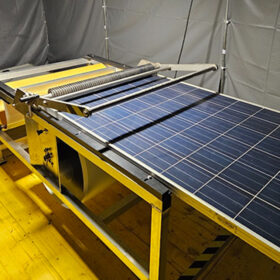
French startup offers on-site solar module repair solution
France-based DOTSun has developed an on-site repair solution for solar panels with degraded backsheets, compatible with PA, PVDF, and PET types. The system uses a compact laminator to apply a protective film to the rear side of the module, reportedly restoring insulation and extending the service life of up to 2,000 panels per site.
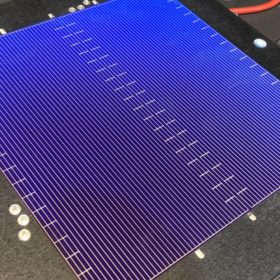
Thicker alumunium oxide layers can reduce ultraviolet-induced degradation in TOPCon solar cells
UNSW researchers developed an experimentally validated model linking UV-induced degradation in TOPCon solar cells to hydrogen transport, charge trapping, and permanent structural changes in the passivation stack. They show that thicker aluminum oxide layers significantly improve UV resilience by limiting hydrogen migration, offering clear guidance for more robust TOPCon designs.

Semi-transparent photovoltaics cost-competitive only up to 50% transparency
Researchers from Spain found that semi-transparent PV systems are commercially viable only up to about 50% transparency, as higher transparency sharply reduces efficiency and increases system costs. Their analysis shows that declining power density, and not balance-of-system or financing factors, is the main driver of higher LCOE, even in high-irradiation regions.
