
Long-term assessment of PV panel degradation under hot, humid tropical climates
A Dutch-Hungarian research team has measured, for 12 years, the degradation rates of PV modules installed in an off-grid system located in Ghana. It found that the panels had an average annual decline in power yield of 3.19%.
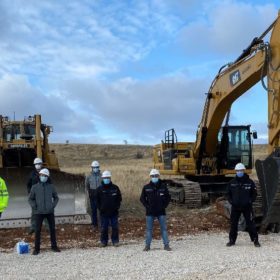
Juwi begins work on 204 MW solar park in Greece
The German renewable energy developer secured the €130m project in a tender held by the Greek government.
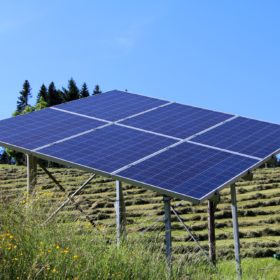
The best renewables combination for off-grid power supply
Scientists in India have proposed a model to design an off-grid, hybrid energy system based on a combination of solar, wind, biomass, biogas and fuel cell, linked to storage, for electrifying a cluster of three village hamlets in the Indian state of Karnataka. The model is implemented through the HOMER software and a genetic algorithm.
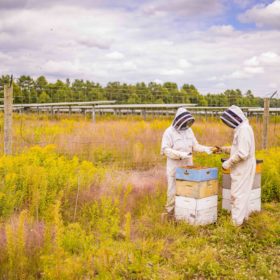
Agrivoltaic beekeeping project in Spain
Endesa plans to set up beekeeping projects at two of its PV plants. The pilot initiative will include the cultivation of 3 hectares of plants that will be pollinated by bees.
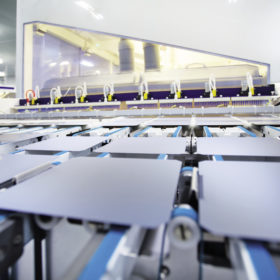
Chinese PV Industry Brief: Longi, Jinko and JA Solar expect their combined capacity of 182mm modules will reach 54 GW next year
At a conference held in Shanghai last week, the three Tier-1 manufacturers explained that the entire Chinese PV industry will continue to adapt to the 182mm wafers over the next months.

Fraunhofer IMWS aims to make it possible to predict reliability and service life of inverters and batteries
The German research institute wants to develop an efficient and reliable methodology, which could contribute to considerable cost reductions in photovoltaic generation – both for manufacturers and operators.
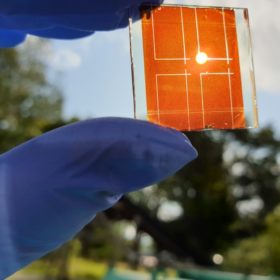
New tech to apply perovskite thin-film layers to conventional solar panels
According to its creator, Swedish start-up Evolar, the new technology can be applied to existing production lines for crystalline silicon modules and increase a product’s efficiency by around 5%.

More land restrictions for solar in Taiwan
PV developers will no longer be allowed to deploy solar on salt flats in ecologically sensitive areas in Chiayi County and the city of Tainan.

Form Energy secures $70 million for ‘aqueous air battery’
Form Energy plans to deploy a 1 MW/150 MWh system with a Minnesota utility by 2023.
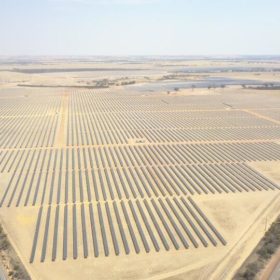
Danish fund backs 5 GW Australian renewable hydrogen project
Copenhagen Infrastructure Partners and Hydrogen Renewables Australia have agreed to develop the 5 GW Murchison Renewable Hydrogen Project in Western Australia. It will use PV and wind to produce hydrogen fuel for export to Japan and South Korea.
