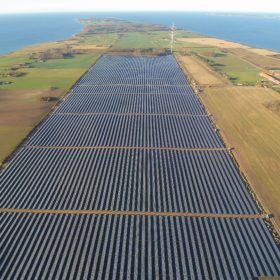
Danish Energy Agency releases draft plan for joint wind and solar auctions
The introduction of similar auctions was proposed by the government in the summer, and backed by the Danish People’s Party in September.
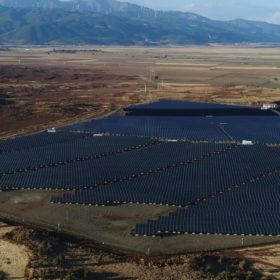
Wagner Solar, Ino Solar partner on 25 MW PV park in Turkey
The solar facility, located closed to Gaziantep in the south of the country, consists of 25 unlicensed sub-units of 1 MW each.

Portuguese government backpedals on tax for renewables
The leading party of Portugal’s left-wing government coalition, the Socialist Party, said that the extension of the CESE tax to renewables would have hindered the further development of clean energy across the country.
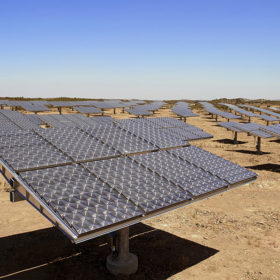
Portuguese Parliament says renewables are not exempt from tax
The CESE tax, so far paid only by conventional energy companies, will be extended to existing RE power plants under the special tariff regime.
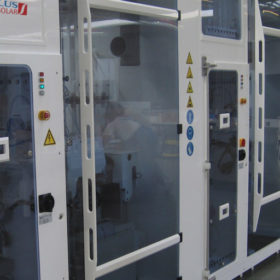
Singulus bags another HJT order
The new order comes from an unspecified customer from China, and includes the shipment of Singulus’ new sputtering system.
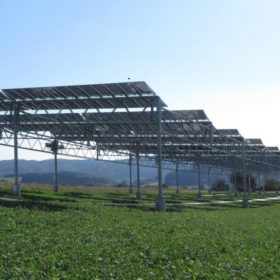
PV increases efficiency of cultivatable land use by more than 60%, Fraunhofer ISE says
Until now, cultivatable land was destined either for the generation of energy, or for food production. However, a pilot project, run by the Fraunhofer ISE, shows the two are compatible.
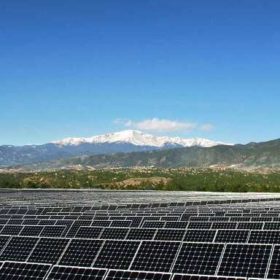
France deployed 484 MW of PV in first nine months of 2017
As of the end of September, the country’s cumulative installed PV capacity reached 7.68 GW.
ADB finances 20 MW of solar in Afghanistan with $44.7 million
The funds will be used to build a solar plant in Naghlu, in the capital Kabul’s Surobi district.
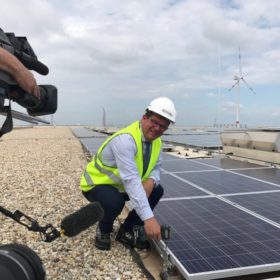
Belgian Court of Appeal rejects lawsuit against Flanders’ grid-fee for residential PV
The so-called “prosumer tax” was introduced in July 2015 and applies to residential PV systems not exceeding 10 kW installed under net metering.
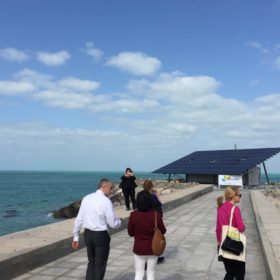
French forces unite to develop solar PV desalination plants
Two French companies have partnered to develop projects that combine renewable energy generation with water desalination. This is an area the solar sector is targeting specifically for the developing world, due to its off-grid compatibility.
