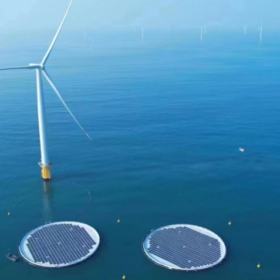
SPIC, Ocean Sun switch on offshore floating solar-wind pilot
State Power Investment Corp. (SPIC) has started operating the world’s first offshore floating solar plant integrated with an offshore wind turbine, at a pilot site off the coast of China’s Shandong province. It features floating PV tech from Norway’s Ocean Sun.
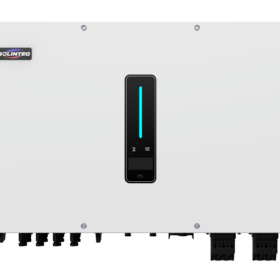
Solinteg unveils hybrid inverter series for C&I applications
Solinteg is offering five versions of its new three-phase hybrid inverters, with nominal power ranging from 25 kW to 50 kW, an efficiency rating of 98.8%, a European efficiency of 98.3%, and up to 4 MPPTs.
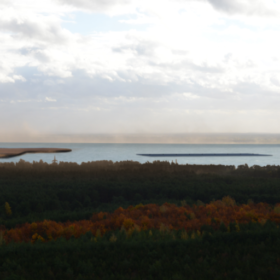
German developers move forward on plans for 21 MW floating solar array
The city of Cottbus, Germany, has passed a resolution to expedite the development of a 21 MW floating solar project. It will be built on a former mine site, with construction set to begin in the spring of 2023.

Uninterrupted PV generation without storage
An Israeli scientist has proposed a way to achieve uninterrupted PV power on the moon without using energy storage. The proposal involves the installation of PV panels around a 360-degree latitudinal ring close to one of the moon’s poles. There would be no inter-array shading, and static vertical PV arrays and arrays mounted on single-axis vertical trackers could be viable mounting structures.
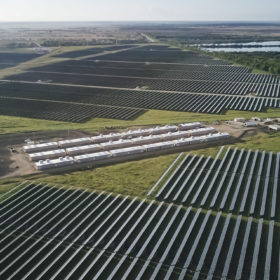
Operations begin at 87 MW solar-powered bitcoin-mining center
Aspen Creek Digital, a US bitcoin miner, has started operations at a 30 MW bitcoin data center powered by an 87 MW solar park in Texas. The project is the company’s second solar-powered bitcoin-mining center.
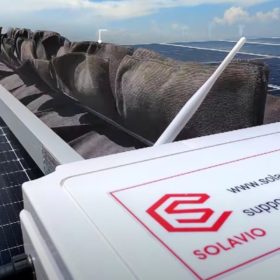
Affordable robotic cleaning solution for solar panels
India-based Solavio has developed the Eco Bot portable and shareable robotic cleaning solution, which is compatible with ground-mounted solar arrays and rooftop PV installations.
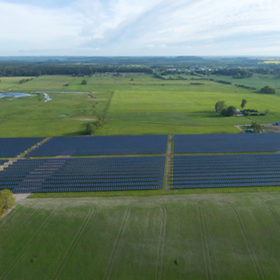
Danish developer set to build Sweden’s largest solar park
European Energy is ready to start building a 128.5 MW solar park in Sweden. The project was halted earlier this year, but that decision has since been reversed. The installation is expected to start generating electricity in 2024.
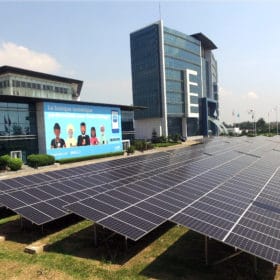
Tipping point for African C&I solar
With installers who cater to African businesses making the headlines this year, Jasper Graf von Hardenberg – whose C&I solar business was recently bought by Shell – explains here how the story of the continent’s commercial and industrial (C&I) solar segment was far from an overnight success.

Spain, Portugal to lead renewables in Europe, says Rystad
Norwegian consulting firm Rystad Energy has described the Iberian Peninsula as “a new European energy powerhouse.” It expects Spain and Portugal to reach 79% renewables in their combined electricity mix by 2030.
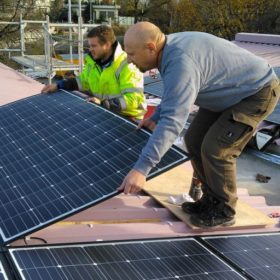
Germany installed 750 MW of solar in September
Germany’s Federal Network Agency (Bundesnetzagentur) says that 691 MW of new PV systems were subsidized under the country’s EEG renewables incentive program in September.
