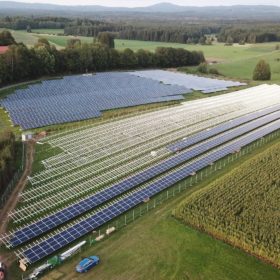
French government identifies 859 degraded sites for utility scale solar deployment
Commissioned by the Ministry for Ecological Transition, the “Etude friches” study lists the industrial and urban wastelands that could accommodate solar parks.
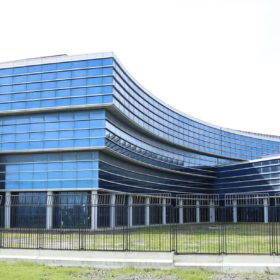
Enel, European Commission sign grant agreement for 3 GW Italian module factory
Enel plans to invest around €600 million in the expansion of its module manufacturing facility in southern Italy. The European Commission will contribute around €118 million to the total sum.
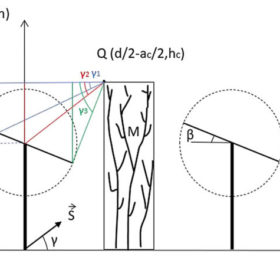
Novel strategy to pair agrivoltaics, solar parks with trackers
Researchers in Spain have developed a way to integrate tree-based agriculture with solar power plants based on north-south-oriented, single-axis trackers. They have identified an ideal geometric space between the module rows for crops to avoid affecting irradiance capture or the trackers.
Sweden deployed 500MW of solar in 2021
Sweden’s cumulative installed PV capacity hit 1.59 GW at the end of December.
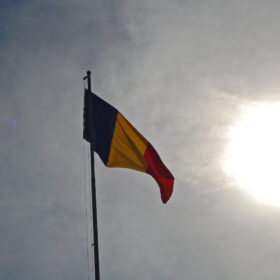
Romania launches 950MW renewables tender
The Romanian authorities have allocated a budget of €457.7 million ($506 million) for a new renewables procurement exercise. Selected wind and solar projects will be granted rebates ranging from €425,000 to €1.3 million per megawatt installed.
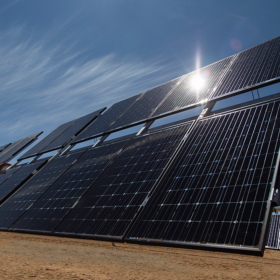
EPC giant says Australian large-scale solar faces workforce shortage
Sterling and Wilson Solar has warned that Australia’s large-scale solar PV industry faces a significant workforce shortage as the nation shifts away from fossil fuels toward renewable power.
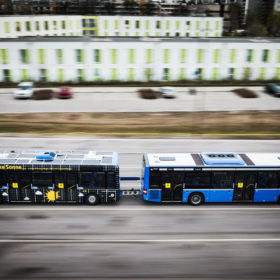
New solar trailer bus from Sono Motors
The municipal bus fleet in Munich, Germany, will soon be equipped with solar-powered trailer units.
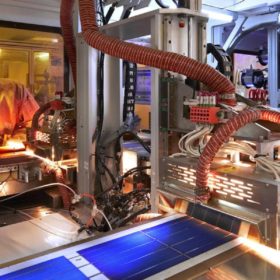
Trina Solar achieves 25.5% efficiency in n-type TOPCon solar cell
The result was confirmed by the National Institute of Metrology of China. It was achieved with a cell size of 210x210mm.
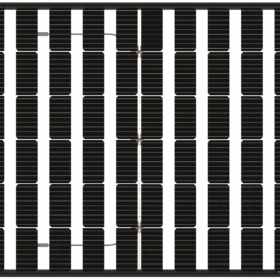
Bisol launches bifacial solar modules with 30% transparency rate for agrivoltaics, carports
The Slovenian solar manufacturer is offering its new product with outputs of 260 and 300W, respectively. Front efficiencies ranges from 13.5% to 14.0% and the temperature coefficient is -0.35% per degree Celsius.
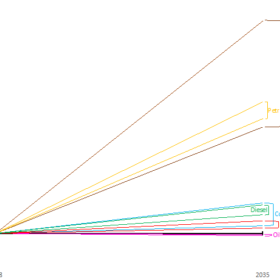
Ukraine invasion reshaping discussion about energy, pricing, renewables
Indra Overland, the head of the Center for Energy Research at the Norwegian Institute for International Affairs, tells pv magazine how the Ukraine war is irreversibly changing the global energy landscape, making massive renewables deployment a certainty. But labor issues, equipment shortages, and reliance on Chinese manufacturing remain obstacles.
