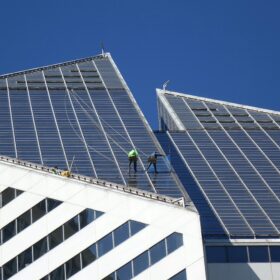
Photovoltaics and jobs: The solar PV sector is the largest employer in the renewable energy industry
The twelfth edition of the International Renewable Energy Agency’s Renewable Energy and Jobs report, in collaboration with the International Labour Organization (ILO), provides the latest data and estimates of renewable energy employment globally. It finds global renewable energy jobs reached 16.6 million in 2024, but growth slowed. The solar photovoltaic sector is by far the largest employer in the renewable energy industry, accounting for over 7.2 million jobs worldwide. The report calls for stronger public action to build domestic supply chains and ensure a more inclusive workforce.

China moves to curb solar overcapacity, stabilize pricing
China’s top industry officials have vowed to curb low-price competition and excess capacity in the solar sector, as authorities begin implementing measures aimed at stabilizing supply chains and rebalancing the market.

Are robots coming for solar installer jobs?
Robots on solar sites are not new; they have been deployed to automate everything from operations and maintenance to inspection and cleaning. In recent months, there has been an uptick in interest in robots for installation, particularly among utility-scale solar developers dealing with staff shortages, safety concerns, rising costs, and pressure to build.

Is Trump just a bump in the road for US solar?
The second Donald Trump administration has put up roadblocks to clean energy investment but renewable energy analysts say superior technology and its economic benefits will ultimately prevail.
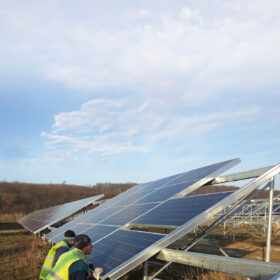
Solar a beacon of hope as Ukrainians yearn for peace
Solar energy has been essential for survival in Ukraine during nearly three years of war since the Russian invasion in 2022. As citizens hope for peace, PV will be instrumental in supporting post-war recovery, whenever it comes.

‘Technical expertise is often questioned more rigorously when exhibited by women’
This week, Women in Solar Europe (WiSEu) gives voice to Brigite Gonçalves, Head of Utility-Scale PV Business Developer at Portugal’s EnergyCon. She says Women in the solar industry face unique challenges, such as underrepresentation in decision-making roles and the persistence of unconscious biases. “To achieve equity, the solar sector must prioritize structural changes, including accessible mentoring and sponsorship programs tailored for women,” she states.
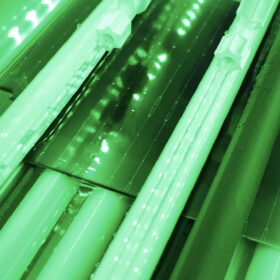
A copper-bottomed answer to solar’s silver dependence
The solar industry has dragged its heels on the issue of silver-dependence for cell metallization, but China’s Jiangsu Xianghuan Technology (JXTC) is moving into commercial production with a copper plating process that overcomes many of the challenges that have limited interest from cell manufacturers.

Will Indian solar manufacturers go back-contact to the future?
Indian PV manufacturers are looking beyond tunnel oxide passivated contact (TOPCon) solar. Back-contact (BC) devices are an enticing prospect but many feel the technology is not mature enough. Uma Gupta considers the cost, yield, and reliability challenges that BC solar has to overcome.

PV agrivoltaics could revitalize Brazilian crops
Agriculture accounts for 21.5% of Brazil’s gross domestic product and 27% of its emissions. PV companies are now targeting an industry that represents 14% of the nation’s small-scale installations. With credit incentives and growing familiarity with the technology, agribusinesses and solar specialists are discovering new opportunities for collaboration.
A gulf between PV ambition and testing facilities
Though it already hosts several of the world’s largest PV installations, the Middle East and North Africa (MENA) region’s solar industry is still young, with limited local infrastructure and expertise. Project developers are learning quickly that building PV in harsh desert environments requires a careful eye on quality. New testing laboratories are looking to meet demand.
