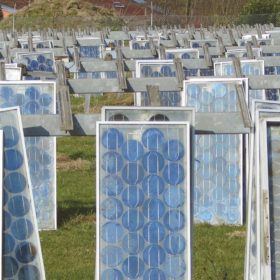
India may host massive amounts of PV module waste by 2030
India’s solar capacity growth up to 2030 also means the accumulation of a significant amount of PV module waste due to early failures or damage during transportation, installation, and operation. The waste generation could be 21 kilotons, assuming India’s cumulative installed PV capacity grows to 287.4 GW by 2030, from 40 GW in 2020. This doesn’t include end-of-life panel waste, as PV systems installed in the 2020-30 period are assumed to have at least 30 years of lifetime.

New process to recycle silicon, silver and glass from end-of-life PV panels
A €4.8 million EU-funded research project is aiming to develop a process that allows recovering all components of a photovoltaic module.
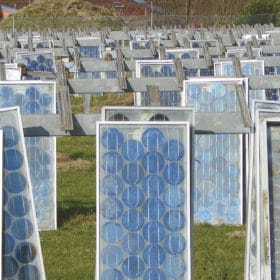
Managing solar PV waste in India
A new report compares the regulatory frameworks of the European Union and India to manage end-of-life solar panels. It also assesses and analyzes the PV waste market and processing capacities in India, while sharing recommendations for Indian stakeholders.
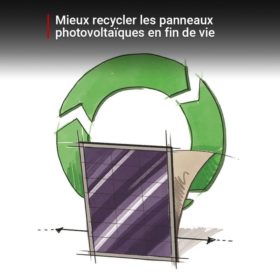
New delamination technique for PV module recycling
French research institute CEA-Liten has created a technique that consists of using a diamond wire to cut through the photovoltaic cells, separating the module’s glass front face from the polymer-based backsheet. The process is claimed to be low-polluting and low-energy.
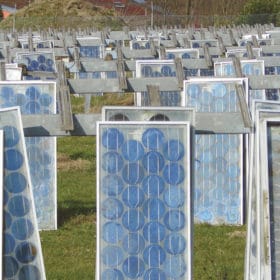
Australia expects 100,000 tons of waste PV modules by 2035
Researchers at the University of South Australia are spearheading a national push to establish a stewardship scheme to manage the impacts of PV systems through their life cycle, as increasing numbers of decommissioned solar PV modules threaten a waste management nightmare.

Australia’s first large-scale PV recycling operation amps up ‘waste’ collection
Reclaim PV is now one step closer to ensuring that solar generation lives up to the promise of providing clean energy throughout its life cycle, and that repurposing its component materials becomes viable.

South Korea to introduce new rules for PV recycling
The South Korean authorities plan to introduce new rules for PV waste recycling in 2023. Several recycling facilities are already being built, including one by the government, with a combined capacity of 9,700 tons.

PV module recyclers aiming for high-purity material recovery
France’s National Institute for Solar Energy takes a look at the state of play in the European solar panel recycling industry.
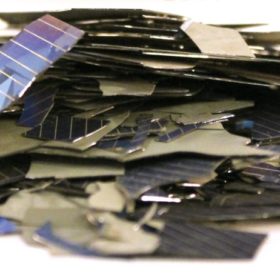
Italian PV panels sent for recycling were instead smuggled to Syria and Africa
Illegally re-badged panels were sold on to Senegal, Burkina Faso, Nigeria, Morocco, Mauritania, Turkey and even Syria. Italian authorities found 60 tons of panels which will be examined.
