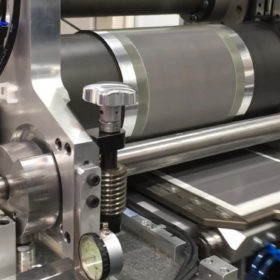
New equipment for solar cell metallization
The system can metallize the front and back sides of silicon solar cells with unprecedented precision and speed, Fraunhofer ISE said. The technology is also suitable for components such as printed circuit boards or chip cards.

Assessing the soiling mitigation properties of anti-reflective coatings
Researchers in China have sought to understand how soiling exacerbated by anti-reflective coatings might inhibit solar panel output. In terms of effectiveness against soiling, the scientists found hollow-silica-nanoparticle coatings did better than solid silica alternatives.
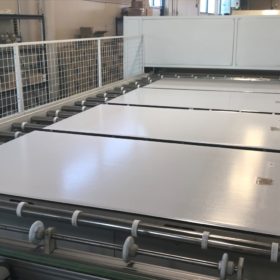
New solar module backsheet based on polyamide
Backsheet manufacturer Tomark-Worthen LLC has developed a new polyamide backsheet under the U.S. Department of Energy’s Sunshot initiative. The product is based on a novel polyamide-ionomer alloy created by U.S. chemicals producer Dow. The alloy, as well as the other materials in the backsheet, are stabilized with a UV/anti-oxidant package that slows down the damaging effects of ultraviolet radiation. The manufacturer claims that the backsheet is 25-30% more affordable than high-efficiency fluoropolymer products.
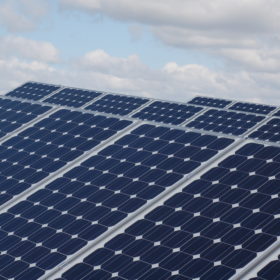
Amerisolar plans new 200 MW solar panel factory in Brazil
Chinese manufacturer Amerisolar and Brazilian energy company Nova Renováveis are planning to set up a 200 MW solar module manufacturing facility in Belo Horizonte, in the Minas Gerais state.
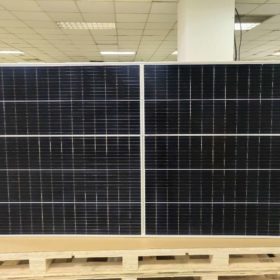
TÜV Rheinland confirms 515.8 W output for Trina’s new modules
Trina Solar has been producing its 500 W modules in series for a month now and plans to increase their output to more than 600 W in the future.

New all-black module with output of 400 W
Solaria says that it will start selling its new all-black panel for residential PV applications in the U.S. market within the current quarter. The monocrystalline module is equipped with a microinverter from Enphase and has an efficiency rating of 20.2%.

Jinko profits surge in 2019
The Chinese manufacturer shipped 14.3 GW of PV modules last year, up 2.9 GW from 2018. In its 2020 outlook, it reiterated its initial shipment guidance and confirmed its plans to ramp up capacity.

Canadian Solar claims 23.81% efficiency for n-type poly module
The Chinese-Canadian manufacturer said the new results improve upon its previous record by around 1%. The achievement has been certified by Germany’s Institut für Solarenergieforschung GmbH (ISFH).
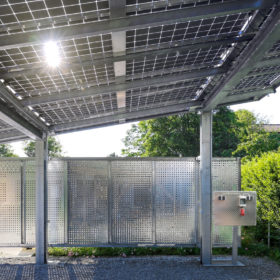
FuturaSun launches glass-glass mono module
The Italian manufacturer said the product has a 30-year performance warranty and strong resistance to adverse weather. The 330 W panel has a claimed efficiency of 19.78% with FuturaSun reporting the 325 W and 320 W versions have efficiencies of 19.48% and 19.18%, respectively.
Jinko Solar the world’s biggest module provider again in 2019
The solar giant shipped 14.2 GW of modules last year, up 33% on 2018 for the high-water mark of another year dominated by Chinese manufacturers.
