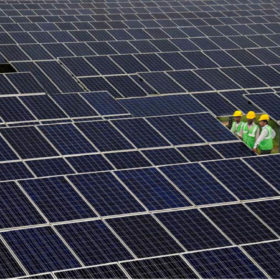
New leaders emerge in India’s 2022 solar market
The Indian solar sector experienced major shifts in market share during 2022, driven by policy changes such as the implementation of basic customs duty on cells and modules and the introduction of an approved list of models and manufacturers, according to Mercom.
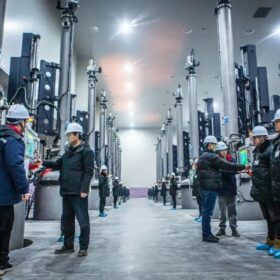
Songci Mechatronics launches low oxygen furnace for n-type wafers
Songci Mechatronics says that its new furnace reduces concentric circles in n-type wafers by 50% and achieves about 24% lower oxygen content than mainstream wafers.

French startup plans 5 GW solar module factory
Holosolis aims to construct a new factory in Hambach, northwestern France, close to where REC previously had plans for a 4 GW heterojunction panel manufacturing facility.
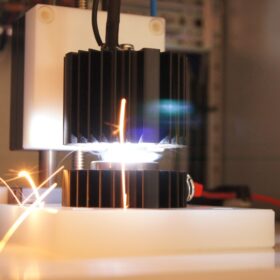
Fraunhofer ISE proposes new standard for inverters with arc fault detectors
The Fraunhofer Institute for Solar Energy Systems (ISE) has replaced the 2011 UL 1699B standard with its new IEC 63027 standard for inverters, incorporating arc fault detectors. The objective is to improve safety and efficiency in inverter technology.

Maldives launches 20 MW solar tender
The Maldives has initiated a 20 MW solar tender, with plans to distribute the capacity across 20 islands.
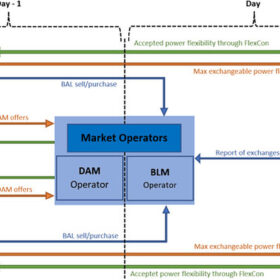
New contract aids renewable producers in meeting retail demand for flexibility
Swedish scientists have created a contract to help renewable energy producers and retailers to pay high imbalance costs. The new framework could boost clean energy profits by up to 4.8% and retail profits by more than 7%, claim the researchers.
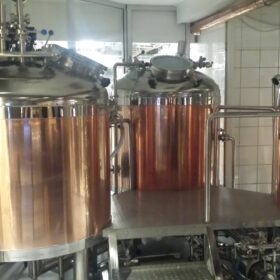
Solar for microbreweries
Spanish researchers have studied the potential of rooftop PV in microbreweries and have found that solar could cut the cost of heating and refrigeration by nearly 30%. They say that coupling PV with small breweries could result in payback times ranging from 4.3 to 6.6 years.
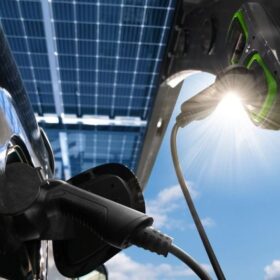
Australian electricians urge government to look to future with energy incentives
The Australian government has been urged to “look to the future” when establishing the parameters for a AUD 1 billion ($670 million) funding package that will offer low-cost finance to people to upgrade the energy efficiency of their homes with products such as solar panels.
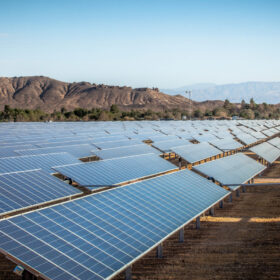
US Treasury Department releases guidance on domestic solar content
The US Inflation Reduction Act includes a 10% bonus for solar power projects that use US-made content, and the Department of the Treasury has released long-awaited details on what this means.
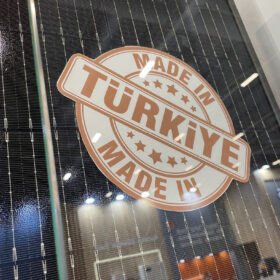
Weekend Read: A manufacturing bridge between Europe and Asia
A combination of protectionist measures, attractive profit margins, and domestic content incentives has revitalized Turkey’s solar manufacturing industry. Jonathan Gifford asks whether the resurgent sector can become a player on the world stage.
