
Using the oceans’ depths to store renewables, compress hydrogen
Underwater gravity energy storage has been proposed as an ideal solution for weekly energy storage, by an international group of scientists. The novel technology is considered an alternative to pumped-hydro storage for coasts and islands without mountains that are located close to deep waters, and may also be interesting for PV if used to store green hydrogen.

Poland allocates 2.2 GW of solar in renewables auctions
The Polish energy regulator has allocated 1.2 GW of PV capacity in a procurement exercise for projects exceeding 1 MW in size and around 1 GW in an auction for projects with capacities of up to 1 MW.

Solar Philippines moves forward with 500 MW solar park
Solar Philippines is currently seeking off-takers for a project that could also sell power on the spot market. The project is part of a 1 GW pipeline that the company announced in December.

Reliance Industries unveils $10 billion plan for solar, storage
India’s Reliance Industries has announced plans to invest $8.1 billion over the next three years to build gigafactories for solar, energy storage, electrolyzers, and fuel cells.
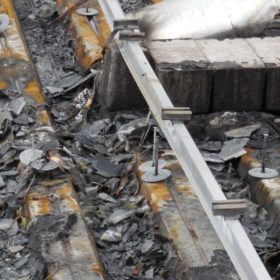
Solar fire prevention hinges on data
Nobody wants their PV systems to catch fire, but little is known about how to actually prevent such incidents.
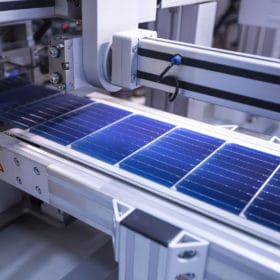
Chinese PV Industry Brief: New solar glass factory in Jiangsu, Longi maintains wafer prices unchanged
Triumph Group is planning to build a $1.71 billion PV glass factory in Suqian City, Jiangsu Province. Longi has maintained unchanged the prices of its wafers for July.
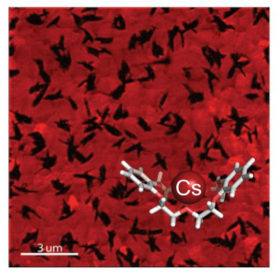
A crowning achievement for perovskite stability
Scientists in Switzerland demonstrated a new type of nanoscale doping for perovskite solar cells. By both improving stability and reducing the chance of the cells leaking any toxic lead into the environment, the discovery addresses two of the largest remaining challenges to the development of the promising class of cell materials.
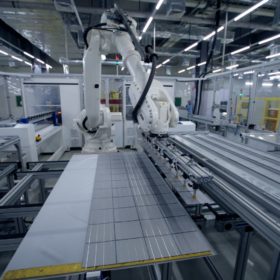
India could add 13.75 GW of PV module capacity by late 2022
The Indian government’s efforts to restrict PV equipment imports and expand domestic manufacturing are starting to bear fruit.
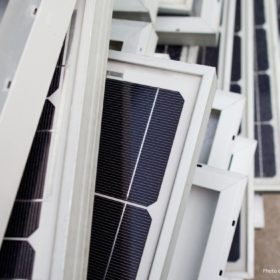
Canberra moves forward with new PV module recycling rules
The Australian federal government’s call for the solar industry to address the issue of PV module waste has coincided with new plans by the Australian Capital Territory government to look at new panel recycling options.
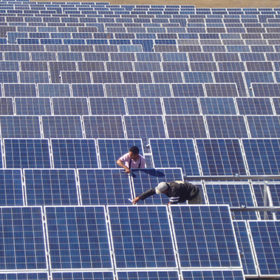
Risen Energy plans 3 GW cell, module factory in Malaysia
China-based Risen Energy is expanding its global footprint with plans to construct a $10 billion production facility in Malaysia.
