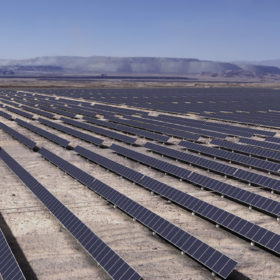
Weekly Round-Up: Gigafactory in Spain, financial close in Armenia, PPA in Sweden
Solar and storage are developing at a relentless pace and pv magazine cannot cover all the interesting developments that are announced day by day. In this weekly Round-Up, we provide a quick review of all facts and deals that should not be off of our readers’ radar.
US government wants to cut solar costs by 60% in 10 years
The US Energy Department set a goal of achieving 2 cents/kWh by 2030, and announced an initial $128 million in funding to support technology development.

Adriatic Sea to host 100 MW offshore PV plant
Italy’s Saipem is planning what could be the world’s largest offshore PV plant — a 100 MW facility located off the coast of the Italian northern region of Emilia-Romagna. The project, whose approval process began two years ago, is expected to become operational by the end of 2025.
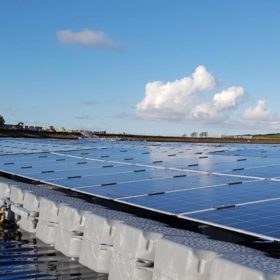
How much floating PV is enough?
Scientists in the UK have had a closer look at the impacts of floating PV systems on the water. They found that their cooling effect on water mitigates blooms of toxic blue-green algae and increased water evaporation, which are both caused by global warming. They also warned, however, that colder water may result in a reduction of the duration of so-called thermal stratification. The right proportion between the surface occupied by the PV array and a water surface’s total area is key for addressing this issue.

Voltalia wins Albania’s 100 MW PV tender with bid of €0.02989/kWh
The French developer will sell 70% of the power generated by the facility to Albanian power utility Operatori i Shpërndarjes së Energjisë Elektrike SH.A. (OSHEE) under a 15-year PPA and the remaining portion will be sold on the spot market.
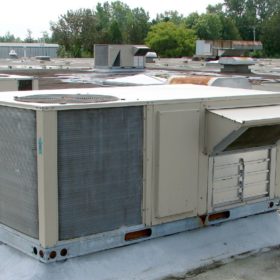
Cooling PV panels with HVAC system exhaust
A French-Lebanese research group has proposed a way to cool down PV modules by using air exhausted from heating, ventilation, and air conditioning (HVAC) systems. They showed that array performance improves when the cooling load rises.

Polyelectrolyte-based inverted perovskite solar cell with 20.29% efficiency
Taiwanese researchers have added bathocuproine (BCP) molecules to three different kinds of solvents used in perovskite cells and have ascertained how this combination increases the carrier mobility and passivates the electron-poor defects. Furthermore, they utilized a polyelectrolyte (P3CT-Na) thin film as hole transporting material instead of commonly-used thin films based on PEDOT:PSS.
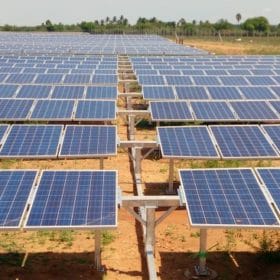
India’s cumulative PV capacity hits 39.1 GW
India had 39.1 GW of grid-connected solar and 216 MW of off-grid projects in operation by the end of February. The state of Karnataka leads with 7.4 GW of installed solar capacity, followed by Rajasthan with 5.5 GW and Tamil Nadu with 4.4 GW.
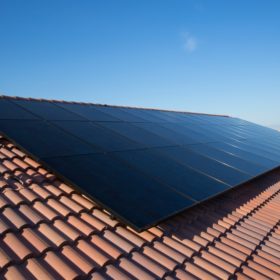
SunPower loan program for US residential solar, storage customers
SunPower claims that the electricity savings could equal the monthly cost of its 25-year loans for residential solar systems.

Chinese PV Industry Brief: Another factory under construction
Talesun has begun work on its 5 GW factory in Siyang county, Jiangsu province and China’s second-largest grid operator, China Southern Power Grid, has announced around 200 GW of renewable energy capacity will be deployed on its service area over the next 10 years.
