
SEG Solar opens 2 GW module factory in Texas
SEG Solar has invested $60 million in a new solar module factory in Houston, Texas.

Sinovoltaics updates PV inverter manufacturer financial stability ranking
The latest financial stability ranking of inverter manufacturers lists Hoymiles Power Electronics, Eaton, Enphase, Kstar and Delta Electronics as the top five.
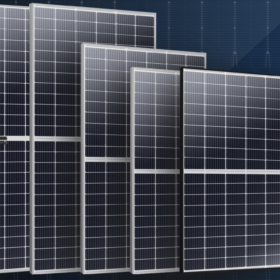
Sinovoltaics updates map of European solar module manufacturing sites
The latest report on the supply chain for European PV module production provides the status of 121 solar manufacturing sites, including closures and capacity on hold. It maps plants that produce PV modules, cells, wafers, ingots, polysilicon, and metallurgical-grade silicon.
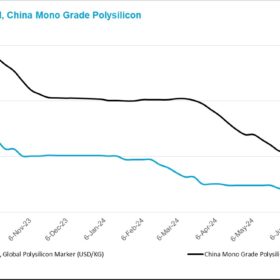
Polysilicon prices stable, futures listing opens possibilities in China
In a new weekly update for pv magazine, OPIS, a Dow Jones company, provides a quick look at the main price trends in the global PV industry.
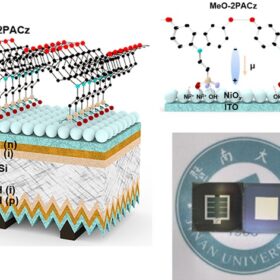
Perovskite-silicon tandem solar cell based on hybrid interconnecting layers achieves 28.47% efficiency
An international research team has designed a two-terminal perovskite-silicon tandem solar cell that utilizes new hybrid interconnecting layers to reduce recombination losses in the top perovskite device. The tandem cell achieved an impressive fill factor of 81.8%, which the scientists said is the highest value ever reported for this cell technology to date.

Israel mandates rooftop solar on new big buildings, targets 3.5 GW by 2040
The Israeli authorities have introduced new regulations requiring rooftop PV on new large buildings, with plans to install 3.5 GW by 2040. The minimum production capacity has been set at 5 kW.

Radiative cooling tech based on polydimethylsiloxane film increases PV module generation by up to 3.72%
Scientists in China have proposed to use polydimethylsiloxane films doped with soda glass to reduce solar module temperature. The coating achieved solar transmittance of 94.8% and sky window emissivity of 95.3%.
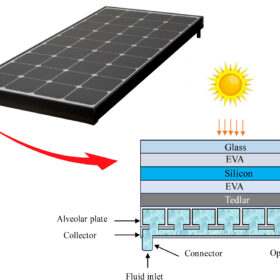
Photovoltaic-thermal panel based on channel-box heat exchanger
Scientists in Morocco have conceived a photovoltaic-thermal panel that uses a channel-box heat exchanger consisting of 94 channels attached directly to the PV module. The simulated design reportedly results in an overall panel efficiency of over 90% and good results in terms of temperature inhomogeneity.

Three-dimensional PV modules for indoor, urban locations
A research team at Korea Electrotechnology Research Institute (KERI) in South Korea is tackling the use of solar PV in non-ideal conditions with a new tool to optimize for urban and indoor PV diffuse light and partial shading conditions. The team also developed three-dimensional solar modules featuring a glass-free, lightweight design that features self-tracking that reportedly produces 60% more power compared to conventional flat modules.
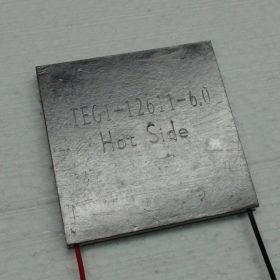
Reducing PV module temperature with water, thermoelectric coolers
Scientists in India have suggested to use thermoelectric cooling to enhance PV module performance. Through a field experiment, they found that thermoelectric coolers combined with water can reduce solar module temperature by up to 38 C.
