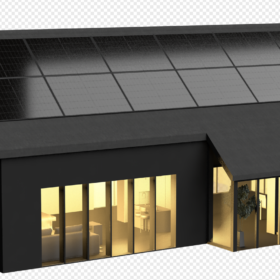
DAS Solar unveils n-type bifacial glass-glass module for residential PV
Chinese module manufacturer DAS Solar has launched an all-black bifacial glass-glass module series with an output of 410 W to 430 W. The new series features efficiencies of up to 22% and a temperature coefficient of -0.3% per degree Celsius. The company is offering a 15-year product warranty and a 30-year power warranty for 87.4% of the initial yield.

Solar electric camper catamaran
Swedish startup POL has unveiled POL Lux, a catamaran boat design with dual electric motors and a solar canopy that can covert into a private sleeping area.
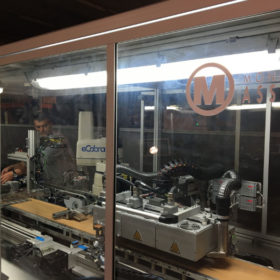
BVG to set up 2 GW solar module fab in India
Bharat Vikas Group (BVG) says it will build a 500 MW, fully automated PV module production line in India, with plans to eventually expand it to 2 GW.
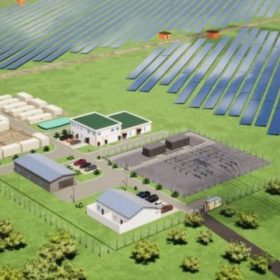
Ivory Coast set to commission first solar plant
Compagnie Ivoirienne d’Electricité (CIE), a utility in the Ivory Coast, is set to inaugurate its first solar plant – a €40 million ($42.6 million), 37.5 MW installation, backed by a 10 MW storage system by Saft.

Croatia investing in storage amid slow solar development
Croatia is preparing to build Eastern Europe’s largest energy storage project. IE Energy has secured €19.8 million ($20.9 million) to develop a 50 MW storage system, potentially extendable to 110 MW by 2024.
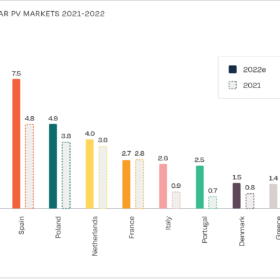
Europe added 41.4 GW of new solar in 2022
In another record year for solar, SolarPower Europe estimates PV in Europe grew by 47% in 2022, rising from 28.1 GW in 2021 to 41.4 GW this year. Germany installed the most with 7.9 GW, followed by Spain at 7.5 GW, and Poland at 4.9 GW. For the first time, the top 10 European solar markets all added at least 1 GW.
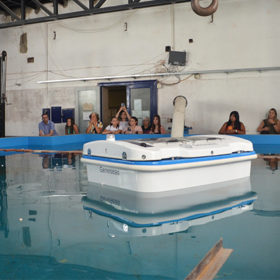
Water cleaning robot powered by solar aims to clean Latin America waterways
Researchers at the National University of La Plata (UNLP) in Argentina unveiled an autonomous robot powered by photovoltaic energy that collects waste and hydrocarbons from water surfaces.
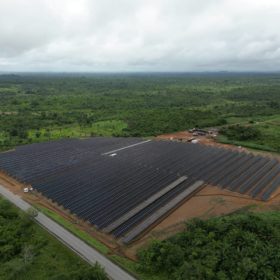
Sierra Leone’s first 5 MW solar plant powers on
Serengeti Energy has started operations at what it claims is Sierra Leone’s first solar independent power project. The 5 MW solar installation is located in Yamandu, Southern Sierra Leone. A second project phase is planned for 2023, bringing its capacity to 25 MW.
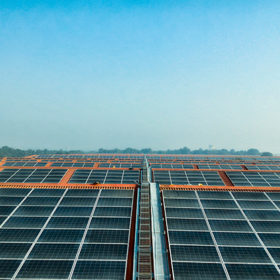
Roadblocks to rooftop solar in India
India is a long way behind its rooftop solar target of 40 GW by 2022, with just 10.4 GW installed through to September this year. To understand the issues, pv magazine speaks to Amplus Solar pv magazine in an interview about factors holding back rooftop solar development in the country.
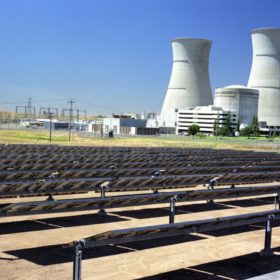
Testing prairie and pollinator agrivoltaics at a former nuclear power site
A team in the US will create a pollinator habitat under a 160 MW utility-scale solar project and measure changes in energy, soil carbon, and management costs at the site.
