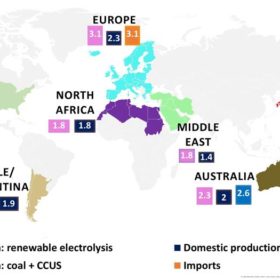
Geopolitical impact of long-distance transport of electricity and hydrogen
In an interview with pv magazine, Indra Overland, the head of the Center for Energy Research at the Norwegian Institute for International Affairs, explains how long-distance electricity and hydrogen transport differs from that of fossil fuels. He says strong Europe-North Africa connections could prove the viability of cables to connect continents, and notes that integration between countries and regions will increase.

Giant wind-solar complex to produce hydrogen in Oman
An international consortium led by Omani oil company OQ is planning a 25 GW wind-solar complex to produce green hydrogen in the central region of the Middle Eastern country. The clean fuel could be consumed on-site, used to produce green ammonia, or exported to other markets.
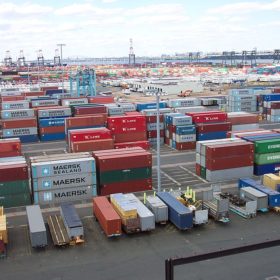
India launches anti-dumping probe for PV cells from China, Thailand, Vietnam
India’s Directorate General of Trade Remedies, an entity under the Ministry of Commerce and Industry, has said that domestic manufacturers have provided sufficient evidence to warrant an investigation into the alleged dumping of solar cells.
PV modules shipping at lower prices in US, EIA data shows
The Energy Information Administration says that more than 2.7 GW of modules were shipped at an average price of $0.34 per watt in March.

Green hydrogen venture aims for $1.50/kg for Los Angeles by 2030
HyDeal LA includes the Los Angeles Department of Water and Power and aims to overcome green hydrogen’s high cost by launching a commercial hydrogen cluster at scale.
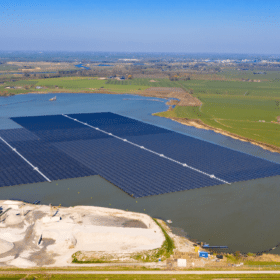
Water quality untouched by floating PV
Baywa re and Dutch researchers have evaluated the first positive effects of floating PV on the flora and fauna in water. They have also ascertained that the erosion of a lake’s banks has decreased.

Hanwha Q Cells announces n-type module with passivating contacts
Production on the new module, called Q.Tron, is expected to begin this year. The product is described as an evolution of the company’s Q.antum cell technology.
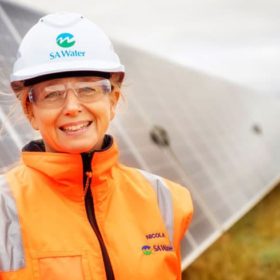
Australian water utility deployed 350,000 PV panels across 33 sites
State-owned utility SA Water has completed an extensive solar project in South Australia, with more than 350,000 PV panels installed at 33 water treatment plants and pump stations.
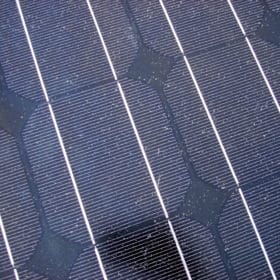
Compressed air tech for solar module cleaning, cooling
British scientists have developed an experimental compressed air system for the simultaneous cleaning and cooling of PV modules. The system was built with a compressed-air unit which was made of a compressor, an air tank, and an airflow regulation valve, and a series of nozzles. The technique was tested on a PV system located in northwestern India.
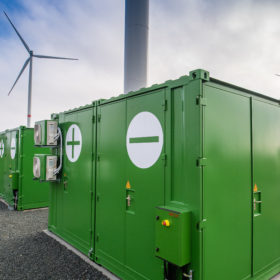
Indian states must start planning for utility-scale battery storage
A new IEEFA report says that state governments across India need to start developing plans to incentivize investments in utility-scale battery storage – just as they did for solar.
