
Japanese scientists build heterojunction solar cell based on titanium dioxide, selenium
Scientists in Japan developed a 4.49%-efficient solar cell based on titanium dioxide and selenium. The devices is based on a new approach aimed at reducing interfacial recombination and increasing open-circuit voltage and efficiency.

Intersolar South America underscores Brazil’s solar growth, tech innovation
The Intersolar South America trade show drew 650 exhibitors and 55,000 visitors in August, highlighting industry growth with new pavilions on storage and electric mobility. Brazil is on track to reach 47.2 GW of installed solar capacity by the end of this year, with 11 GW of new PV capacity additions, according to Brazilian PV association ABsolar.

Midea presents 4.5 kW residential heat pump
The Chinese manufacturer said its new propane heat pump doesn’t need an outdoor unit and is able to operate with temperatures down to -20 C.
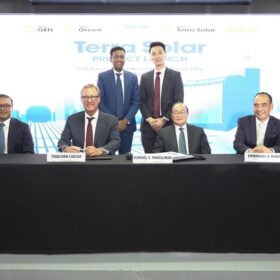
Actis invests in 3.5 GW/4.5 GWh of solar-plus-storage in Philippines
Private equity investor Actis has become a strategic partner in a 3.5 GW/4.5 GWh solar-plus-storage project in the Philippines. The project is poised to become the world’s largest integrated renewables and energy storage installation upon completion. Actis is investing $600 million for a 40% equity stake.
Clime Capital invests $10 million in PV developer in Philippines
Singapore-based fund manager Clime Capital is investing up to $10 million in Upgrade Energy Philippines (UGEP). The money will go toward supporting commercial and industrial (C&I) and utility-scale solar deployment.

India proposes ALMM mandate for solar cells from April
India’s Ministry of New and Renewable Energy (MNRE) has started accepting feedback on draft guidelines for the Approved List of Models and Manufacturers (ALMM) for solar cells. The MNRE plans to implement the guidelines from April 2026.
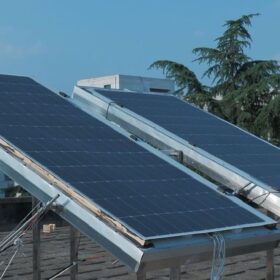
Lightweight ventilated BIPV system for low-load rooftop applications
Scientists in China have designed a ventilated building-integrated photovoltaic system that relies on flexible solar modules with a weight of 6 kg/m2. The system also uses an airflow channel under the PV panels to reduce their operating temperature and increase their power yield.
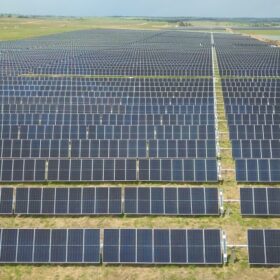
Australian authorities approve 600 MW/1,200 MWh of solar-plus-storage
The Australian federal government has approved a 600 MW/1,200 MWh solar farm and battery energy storage system in the state of New South Wales.
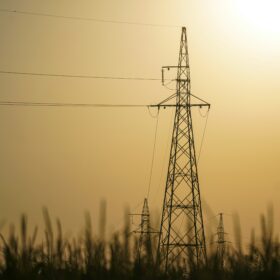
France records 233 hours of negative electricity prices in H1
KiloWattSol, an independent solar consultancy, says there were 308 hours of negative electricity prices from the start of 2024 to Aug. 23 – more than double the 147 negative hours recorded in 2023.

New algorithm enables cost-optimized operation of residential heat pumps
Researchers in Austria have developed a new predictive control algorithm that can reportedly improve comfort levels in houses equipped with heat pumps. The algorithm also enables price predictions based on analysis of day-ahead electricity prices.
